
Beyond Sunday Morning: Reclaiming the True Meaning of Church
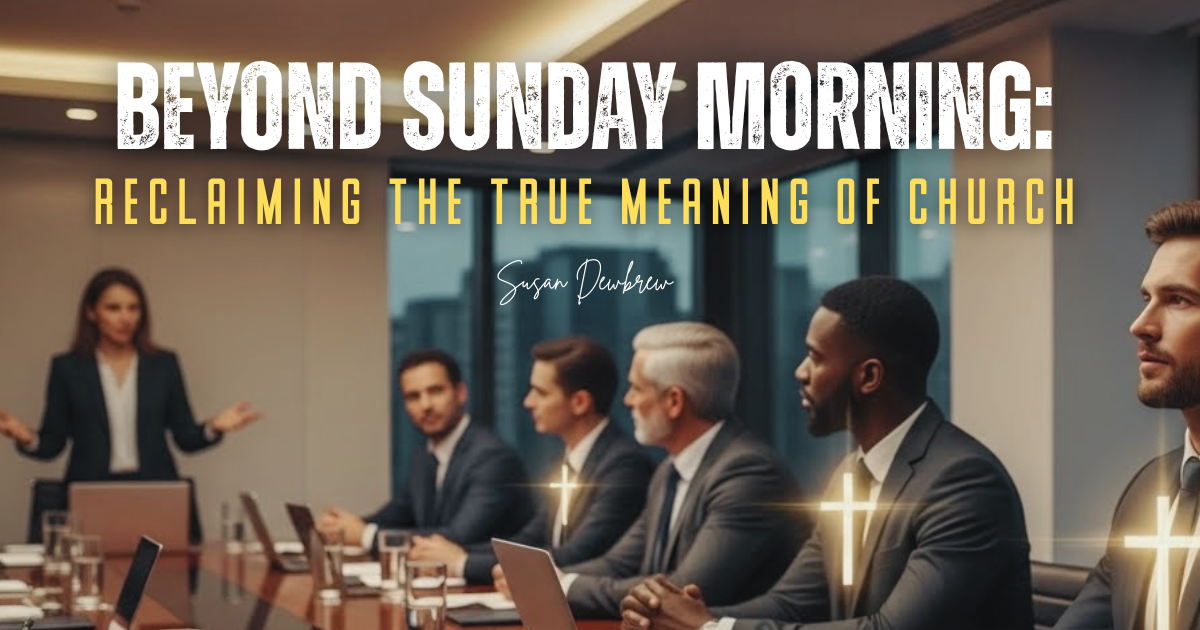
When Jesus said "I will build my ecclesia" (Matthew 16:18, NIV), He wasn't talking about a building where professionals perform while we watch. He wasn't describing a place you go on Sunday mornings to observe worship, listen to a sermon, and maybe volunteer in the nursery.
He was inaugurating something far more powerful—and far more dangerous to the enemy's plans.
What Ecclesia Actually Means
Most of our English translations render Jesus' word as "church." But in Jesus' time, when He spoke of ecclesia, His listeners would have immediately understood Him to mean something governmental—an assembly with legal authority to make decisions and implement them.
In Greek city-states like Athens, the ecclesia was the governing assembly where citizens gathered to conduct the business of the city. They made decisions about laws, policies, and the direction of their community. And here's what many miss: this wasn't separate from their religious life. They saw their governmental role as a form of worship, believing they received divine instruction from their gods and goddesses for what should happen on earth.
Jesus was claiming that same kind of authority—but under a different King.
When we reduce "ecclesia" to "going to church," we've gutted the concept of its power. We've transformed participants into spectators, watching professionals do worship, listening to professionals teach us lessons, maybe serving in some capacity, but fundamentally passive in our understanding of what it means to be the ecclesia.
The reality? The ecclesia isn't a place you go. It's who you are. It's the assembly of King Jesus, and it carries governmental authority to establish Kingdom reality on earth.
The Three Offices We're All Called To
Here's where it gets even more revolutionary: the ecclesia of King Jesus isn't just governmental in the narrow political sense. It integrates three distinct but inseparable functions—priestly, prophetic, and kingly.
The Priestly Function: This is the part we often do recognize. It's worship, prayer, communion with God, intercession. It's the vertical relationship, the intimate connection between us and our King. Without this, we have no power and no direction. We're just implementing our own ideas rather than partnering with Heaven.
The Prophetic Function: This is hearing God's voice and speaking it into situations. It's discernment, revelation, insight into what God is doing and saying. It's not reserved for the few with a special calling—every believer is meant to hear the Shepherd's voice. The prophetic keeps us aligned with Heaven's perspective rather than trapped in earthly limitations.
The Kingly Function: This is the governmental authority we've largely forgotten. It's the power to decree, to establish, to implement Kingdom reality in our spheres of influence. It's taking the revelation we receive (prophetic) and the intimacy we maintain (priestly) and actually changing things on earth to reflect Heaven's pattern.
These three aren't separate callings for different people. They're the integrated calling of every believer. Some may emphasize one more than another based on their gifting, but we're all meant to function in all three.
This is the order of Melchizedek—not a genealogical office passed down through family lines, but a called office available to anyone who will answer. And it's not about control or hierarchy. It's about responsibility to serve, authority to establish, and power to transform.
Why the Church Is the Last Holdout
Here's something that should shake us: everywhere we look in Western culture, we're seeing the unity of men and women manifesting. In business. In politics. In education. In entertainment. Women and men working together, leading together, contributing together.
Everywhere except in the one place that should be leading the way—the church.
The institutional church has become the most stubbornly, obstinately resistant to the very unity that the rest of culture is already embracing. And why? Because the church is where we hold the most power.
The enemy doesn't mind unity of men and women in the business world. That's a threat, sure. But if men and women who are in right relationship with the Lord come into right relationship with each other—operating as the unified ecclesia Jesus envisioned—we become unstoppable.
That's why the attack is fiercest here. That's why the resistance is strongest here. The enemy knows that Kingdom unity combined with Kingdom authority releases something he cannot withstand.
Moving From Spectators to Participants
So how do we actually become the ecclesia rather than just attending church?
It starts with reconnecting—or perhaps connecting for the first time—with your King in a real, personal, daily way.
Too many believers live practically as though God created them, wound them up like a toy, and then left them running while He waits for them to die and come to Heaven. They believe the right doctrines, they attend the right services, but they have no expectation of actual conversation with God. No expectation that He's a partner in their daily life.
This has to change.
If He's not the King of your life—not in theory but in daily practice—how will you help inaugurate Him in your community? If you're not in constant communication with Him, how will you know what He's doing so you can join Him? If you're not cultivating that priestly intimacy, you'll have nothing prophetic to speak and no power for kingly action.
The restoration of ecclesia begins with you reconnecting with your King. Not just knowing about Him. Actually knowing Him. Hearing His voice. Following His lead. Partnering with His plans.
And it continues with you recognizing that you're not meant to be a spectator. You're not meant to hire professionals to do the spiritual work while you watch and occasionally volunteer. You're meant to be fully engaged in the priestly, prophetic, and kingly work of the Kingdom.
You're meant to worship (priestly). You're meant to hear and speak God's voice (prophetic). You're meant to exercise governmental authority to establish Kingdom reality wherever God has placed you (kingly).
This isn't about overthrowing church leadership or abandoning gathered worship. It's about recognizing that the ecclesia is so much bigger than Sunday morning. It's every day. It's everywhere. It's you and me living out Kingdom reality in our homes, our workplaces, our communities.
The Invitation
Jesus is building His ecclesia. Present tense. Ongoing action. He's recruiting an army, and He intends for you and me to be in the vanguard—at the very head of the parade, inviting others to join the march.
Because here's what we know: God's Kingdom is coming in the world. Not someday when Jesus returns to rescue us from a doomed planet. Now. Today. Through His ecclesia—His governmental, priestly, prophetic assembly of believers who know Him personally and expect Him to transform the real world through them.
The question isn't whether the Kingdom is coming. The question is whether you'll step into your calling as part of the ecclesia that releases it.
Will you move from spectator to participant? Will you reclaim the true meaning of what it means to be the church—not a place you go, but who you are?
The invitation stands. The King is calling. The ecclesia is assembling.
Your place is waiting.
Blessings,
Susan 😊