
Jesus's Public Declaration
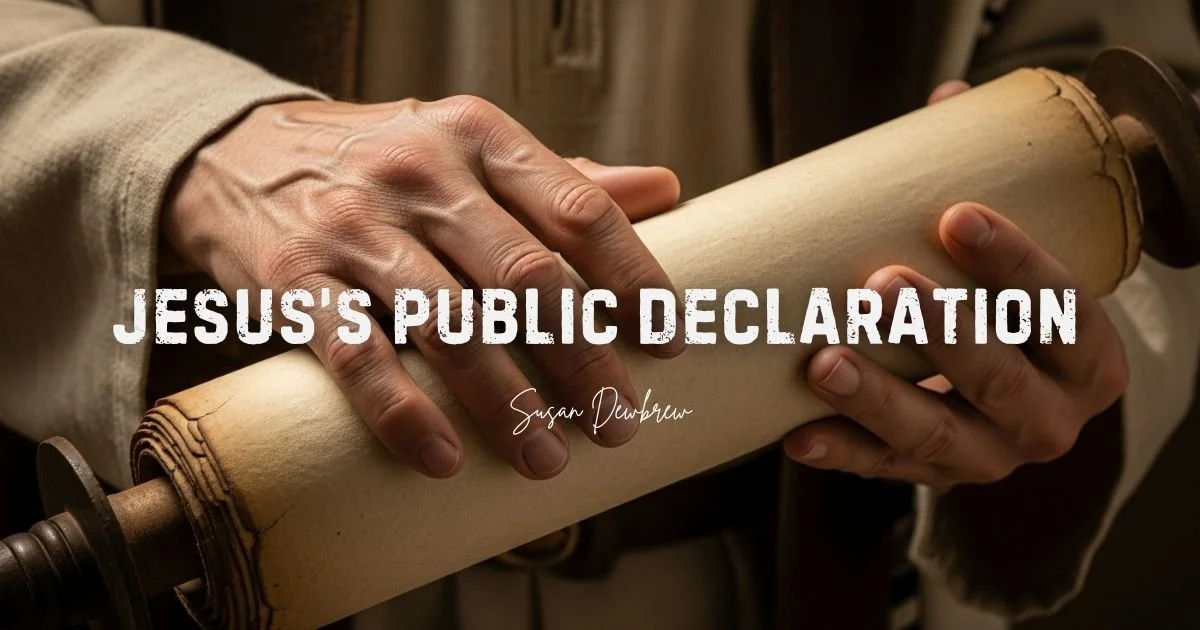
There's a moment in Jesus's ministry that doesn't get talked about enough. It's the moment He went public with His mission statement. Not in Jerusalem. Not in some big city. In His hometown. In front of people who knew Him as a kid.
And what He said that day changes everything about how we should view inner healing.
The Setup
Jesus had been doing miracles here and there—healing people quietly, telling them not to spread the word. But then something shifted. He started going from synagogue to synagogue, teaching and healing openly. Word spread fast. By the time He showed up in Nazareth—the town where He grew up—everyone had heard the rumors.
Can you imagine that moment? Walking into your hometown synagogue. Seeing the faces of people who watched you grow up. Your neighbors. Your relatives. People who remember when you were learning to walk, learning to talk, learning Torah.
And then standing up to declare who you really are.
That takes guts.
Luke 4 tells us He stood up to read on the Sabbath, as was His custom. They handed Him the scroll of Isaiah. And He didn't just read wherever it opened. He searched for a specific passage. He WANTED this one.
Isaiah 61:1.
This wasn't random. This was intentional.
What He Actually Said
Isaiah 61:1 (NASB): "The Spirit of the Lord God is upon Me, because the Lord has anointed Me to bring good news to the afflicted; He has sent Me to bind up the brokenhearted, to proclaim liberty to captives and freedom to prisoners."
Then He rolled up the scroll, handed it back, sat down, and said: "Today this Scripture has been fulfilled in your hearing."
Mic drop.
Let's break down what He just claimed.
Good News to the Afflicted
First, He says He came to bring good news to the afflicted, to the poor. The Hebrew word there means people who know they're in need. The lowly. The ones who aren't pretending they have it all together.
Not the self-righteous. Not the "I'm fine, everything's fine" crowd. Not the people walking around with their spiritual resumes, trying to prove how holy they are.
The broken ones. The hurting ones. The ones who know something's wrong and they need help.
If you can't admit you have a need, you can't receive what Jesus came to bring. It's that simple.
I meet people all the time who won't admit they need inner healing because they think it makes them look weak. They think it means they're not "spiritual enough" or their faith isn't strong enough.
And I'm like—do you think you're more put-together than the people Jesus came for? Because He specifically said He came for people who know they're afflicted.
Pride will keep you from healing every single time.
Bind Up the Brokenhearted
Second, He says He came to bind up the brokenhearted.
That word "bind" in Hebrew is kabosh. It's the picture of wrapping a turban—taking strips of cloth and carefully winding them around and around until everything is secure and held together.
And "brokenhearted"—that's shabar. Shattered. Broken into multiple pieces.
So the image is this: Jesus takes a heart that's been shattered—blown apart by trauma, abuse, rejection, loss, whatever—and He carefully, tenderly gathers up every single piece and wraps them back together until you're whole again.
That's not a one-time prayer at an altar. That's a process. That's Him working with you, piece by piece, memory by memory, wound by wound, until you're integrated. Whole. Healed.
This is EXACTLY what inner healing is.
And Jesus said it's what He came to do.
Liberty to Captives
Third, He says He came to proclaim liberty to captives.
A captive is someone who was taken against their will. They didn't do anything to deserve being locked up. They're victims. Hostages.
If you were abused as a child, you're a captive. If you were molested, you're a captive. If you were emotionally destroyed by a parent or spouse, you're a captive. If trauma held you hostage and you've been living in survival mode ever since, you're a captive.
You didn't ask for it. You didn't deserve it. Someone else sinned against you, and the enemy used it to lock you up.
Jesus came to set you free.
Not by telling you to "just get over it." Not by shaming you for still struggling. By actually addressing what happened to you and breaking the power it has over your life.
Freedom to Prisoners
Fourth, He says He came to bring freedom to prisoners.
A prisoner is different from a captive. A prisoner did something wrong. They're serving time for their own actions.
If you sinned and it opened a door to the enemy, you're a prisoner. If you made choices that led to bondage, you're a prisoner. If you hurt people and now you're carrying guilt and shame, you're a prisoner.
Jesus came for you too.
He came to bring genuine repentance—not just "I'm sorry," but actual transformation. A change of heart. A renewing of your mind. Freedom from the patterns and strongholds you've been trapped in.
Here's the Beautiful Part
Jesus came for BOTH.
He came for the victims AND the perpetrators. He came for the innocent AND the guilty. He came for those who were hurt AND those who did the hurting.
Because here's the truth: most of us are both. We've been wounded, and we've wounded others. We've been captives, and we've held others captive with our unforgiveness or our control or our bitterness.
And Jesus came to set ALL of it free.
That's what unleashing God's Kingdom looks like. It's not just spiritual warfare. It's not just deliverance from demons. It's dealing with the whole person—spirit, soul, and body.
When you get healed, God's Kingdom comes upon you. When you get delivered, God's Kingdom comes upon you. When you break agreement with lies and receive truth, God's Kingdom comes upon you.
This is what Jesus announced that day in Nazareth.
What It Cost Him
You know what happened after He made this declaration? The people in His hometown tried to kill Him.
They were so offended by what He said that they drove Him out of town and tried to throw Him off a cliff.
Why? Because He told them the truth about who He was and what He came to do. And they couldn't handle it.
Some things never change.
People still get offended when you talk about inner healing. They still try to shut it down, call it demonic, call it new age, call it unbiblical.
Because the enemy doesn't want people healed. He doesn't want broken hearts mended. He doesn't want captives set free. He doesn't want prisoners released.
He wants you to stay wounded so he can keep using those wounds against you.
Greater Works
Before Jesus left, He told His disciples: "Greater works than these you will do, because I go to the Father."
Greater works.
That means we're supposed to do what He did. Heal the brokenhearted. Set captives free. Release prisoners. Proclaim good news to people who are hurting and know they need help.
We're not just supposed to preach ABOUT what Jesus did. We're supposed to DO what Jesus did.
And that includes inner healing.
If Jesus came to bind up the brokenhearted, and we're supposed to do greater works than He did, what does that tell you about whether inner healing is for today?
My Own Journey
I've been doing inner healing work for years now—both receiving it myself and ministering it to others.
I'm SO much freer than I was 15 years ago. So much more whole. So much more integrated. The lies I used to believe about myself, about God, about my worth—they're gone. The shame I carried from things that weren't even my fault—it's gone. The patterns I was trapped in—broken.
And I'm still going. I still have pieces Jesus is putting back together. Areas where I need Him to show up and speak truth. Wounds that still need His touch.
Even doing these podcasts—stepping out without Gregory here physically beside me—that's me working through inner healing. Learning to trust. Learning to believe I have something worth saying even when I'm scared.
This is the work. This is what it looks like to let Jesus gather up the broken pieces and bind them back together.
It's messy. It's vulnerable. It's not a one-time event.
But it's worth it.
The Invitation
So here's my question for you: Are you afflicted? Are you brokenhearted? Are you a captive or a prisoner—or both?
Because if you are, Jesus has good news for you.
Not condemnation. Not shame. Not "try harder and pray more."
Good news.
He came for you. He came to bind up your wounds. He came to set you free. He came to proclaim liberty over your life.
And He's still doing it today.
Psalm 34:18 (NASB): "The Lord is near to the brokenhearted and saves those who are crushed in spirit."
He's not far away, waiting for you to get your act together before He'll help you.
He's near. He's close. He's in the same space as your pain. He's not disgusted by your brokenness. He's drawn to it.
Because that's what He came to heal.
That was His mission statement in Nazareth. That's still His mission today. And if you let Him, He'll do the same work in you that He's done in countless others.
Including me.
It's available. It's biblical. It's powerful.
And it's waiting for you to say yes.
Blessings,
Susan 😊