
The Bondage of Looking Perfect
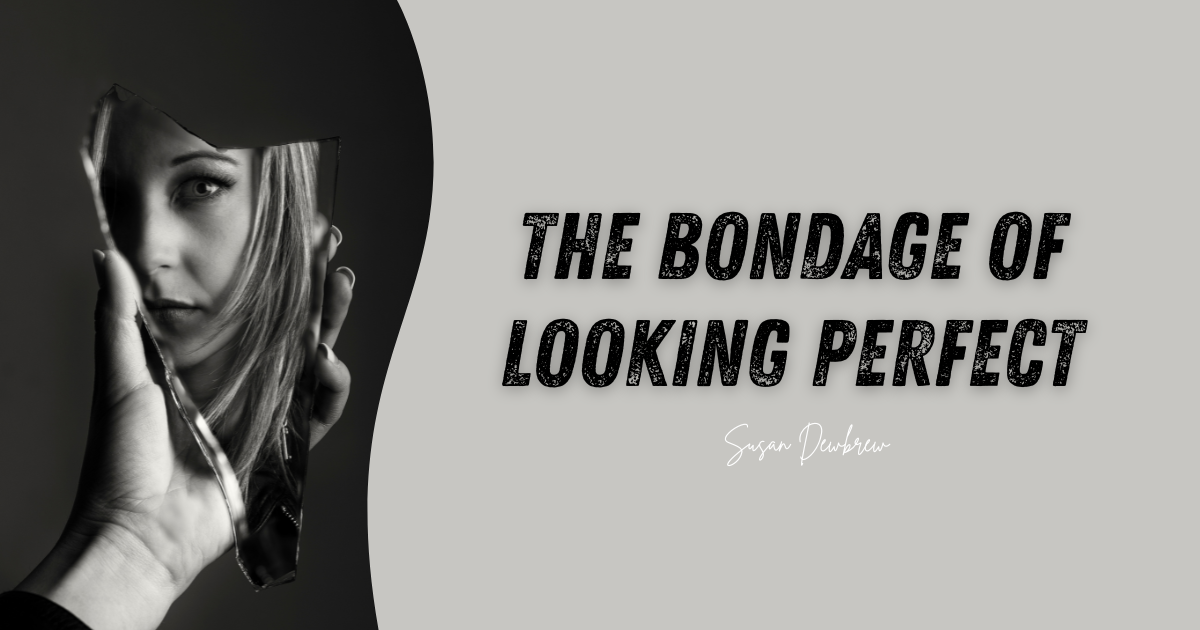
"Here I was on stage in front of 60,000 people portraying confidence and power, but I was tormented—uncomfortable in my own skin."
My friend Robia Scott was describing her life at the pinnacle of success. She'd danced for Prince, appeared on hit television shows, traveled the world performing. From the outside, she looked like she had it all together. Thin. Fit. Successful. Confident.
But inside? She was dying.
This is the bondage of looking perfect: you can appear to have everything while actually having nothing. You can look successful while being tormented. You can present an image of confidence and power while feeling uncomfortable in your own skin.
And the worst part? You become a prisoner to that image. You have to maintain the facade at all costs, even though it's killing you.
The Pressure to Maintain an Image
We live in a culture absolutely obsessed with image. Social media has made it exponentially worse, but this pressure existed long before Instagram and TikTok.
Especially for women.
We're constantly bombarded with messages about how we should look, what we should weigh, how we should dress, how we should present ourselves. The standard of beauty is impossibly high and constantly shifting. We're never thin enough, never fit enough, never young enough, never beautiful enough.
And if we happen to work in an industry where appearance is paramount—like entertainment, modeling, or even just corporate America where you're expected to look a certain way—the pressure intensifies exponentially.
Robia felt this acutely. As a professional dancer and actress, her body was literally her instrument. Her appearance was part of her job. She had to look perfect.
But here's what nobody talks about: when you work that hard to maintain a perfect image, it exacerbates what's already broken inside.
As Robia put it, "Being a dancer and an actress just exacerbated that issue." The issue being her already complicated relationship with food and body image. The professional pressure to look perfect amplified her internal struggles until they became all-consuming.
When Your Outer Appearance Doesn't Match Your Inner Reality
This is the tragic irony of perfectionism: the better you get at looking perfect, the bigger the gap between your outer appearance and your inner reality.
Robia always looked thin and fit. Nobody looking at her would have guessed she was battling eating disorders, cycling through dieting, starving, binging, and purging. Her outer appearance didn't reflect what was going on internally.
She could portray confidence and power on stage while being anxious and self-conscious off it. She could smile for the camera while being tormented inside. She could dance in front of 60,000 people while being uncomfortable in her own skin.
The image was perfect. The reality was painful.
And I think most of us can relate to this experience, even if we've never been on stage or on television.
We know what it's like to show up at church looking put together while we're falling apart inside. We know what it's like to post the highlight reel on social media while our real life is a mess. We know what it's like to smile and say "I'm fine" when we're actually dying.
We've all learned to maintain an image that doesn't match our reality. We've all become experts at looking perfect while feeling broken.
The Prison of Perfectionism
Here's what makes this so insidious: perfectionism becomes its own form of bondage.
You start out trying to meet a standard—maybe one imposed by others, maybe one you've imposed on yourself. You work hard at looking good, being successful, maintaining the image.
And maybe you achieve it. Maybe you actually become what you were trying to be. Maybe you get thin, get fit, get successful. Maybe you actually look perfect.
But you don't feel perfect. You don't feel free. You feel trapped.
Because now you have to maintain it. Now you can't let anyone see the real you. Now you're performing constantly, never able to relax, never able to be authentic, always worried that someone might see past the facade.
Robia described being "tormented all day about what I was going to eat, what I wasn't going to eat." Can you imagine? All day, every day, tormented by thoughts about food. Constantly dieting and starving, then binging and purging. Chain smoking to manage anxiety.
That's not freedom. That's prison.
And it doesn't matter how thin you are, how successful you look, how many people applaud your performances. If you're tormented on the inside, you're not free.
Why Thin and Fit Doesn't Equal Free
This is something our culture desperately needs to understand: external perfection doesn't equal internal freedom.
You can have the perfect body and still hate yourself. You can be at your goal weight and still be in bondage to food. You can look successful and still be dying inside.
Robia was thin. She was fit. She was successful by every external measure. But she wasn't free.
The bondage wasn't about her weight or her appearance—it was about her relationship with food, her body, herself. It was about the torment in her mind, the anxiety in her heart, the constant performance required to maintain the image.
And here's the really tragic part: our culture tells women that if they could just lose those last ten pounds, fit into those jeans, look like that model, then they'd be happy. Then they'd feel good about themselves. Then they'd be free.
It's a lie.
You don't find freedom by achieving external perfection. You find freedom by experiencing internal transformation.
And that only comes from knowing God.
The Exhaustion of Performing
One of the most exhausting things about maintaining a perfect image is that you can never stop performing.
You have to be "on" all the time. You can't let your guard down. You can't be real, can't be vulnerable, can't show weakness or struggle or imperfection.
Even in your own mind, you can't give yourself a break. You're constantly monitoring, constantly critiquing, constantly trying to maintain control.
Robia was performing on stage in front of thousands of people. But the real performance was happening off-stage, in her daily life, as she maintained the image of having it all together while battling torment inside.
That's exhausting. Soul-crushing. Unsustainable.
And yet so many of us are doing exactly the same thing.
We're performing at work, performing at church, performing on social media, performing in our relationships. We're showing everyone what we think they want to see while hiding who we really are.
We're dying inside while looking perfect outside.
And we're so tired.
God's Kingdom Values Authenticity Over Appearance
Here's where the good news comes in: God's Kingdom operates on completely different values than the world's system.
In the world, image is everything. Appearance matters more than reality. Success is defined by external markers. The goal is to look good, no matter what it costs you internally.
But in God's Kingdom, authenticity trumps appearance every single time.
Jesus consistently valued what was happening inside people's hearts over what they looked like on the outside. In fact, He reserved His harshest words for the religious leaders who looked perfect externally while being corrupt internally.
He called them "whitewashed tombs which indeed appear beautiful outwardly, but inside are full of dead men's bones and all uncleanness" (Matthew 23:27, NKJV).
Ouch. But accurate.
Looking perfect on the outside while being dead on the inside—that's the opposite of what God wants for us.
He doesn't care about your image. He cares about your heart. He doesn't want you to look successful while being tormented. He wants you to be free—genuinely, internally, authentically free.
The Apostle Paul wrote, "For you were bought at a price; therefore glorify God in your body and in your spirit, which are God's" (1 Corinthians 6:20, NKJV).
Notice: both body and spirit. Not just looking good on the outside, but actually being whole on the inside. Not performing perfection, but experiencing freedom.
Permission to Stop Performing
So here's what I want to say to you: you have permission to stop performing.
You don't have to maintain the image anymore. You don't have to pretend you have it all together. You don't have to smile when you're dying inside.
God already knows the truth. He sees past your carefully crafted facade. He knows about the torment, the bondage, the exhaustion of constantly performing.
And He's not shocked. He's not disappointed. He's not demanding that you fix yourself before you can come to Him.
He's inviting you to come exactly as you are—messy, broken, tormented, bound—and let Him set you free.
You don't need to look perfect for God. You need to be real with Him.
Jesus said, "Come to Me, all you who labor and are heavy laden, and I will give you rest" (Matthew 11:28, NKJV).
Rest. Not more performance. Not higher standards. Not another diet or exercise program or self-improvement plan.
Rest.
The kind of rest that comes from finally being honest about where you really are. The kind of rest that comes from laying down the exhausting work of maintaining an image. The kind of rest that comes from being known—truly known—and loved anyway.
Trading Performance for Freedom
What would it look like for you to trade the bondage of looking perfect for the freedom of being authentic?
What would change if you stopped performing and started being real?
Maybe you'd have to admit that you're not okay. Maybe you'd have to acknowledge that you need help. Maybe you'd have to let people see the messy reality behind your perfect image.
That's scary. Terrifying, even.
But it's also the beginning of freedom.
Robia had to stop performing perfection before she could experience true freedom. She had to be honest about the eating disorders, the chain smoking, the torment, the bondage. She had to admit she didn't have it all together, even though she looked like she did.
And when she did—when she came to the Lord and let Him see the real her, not just the image she'd been maintaining—everything changed.
Not instantly. Not magically. But really, truly, powerfully changed.
The torment lifted. The bondage broke. The exhausting performance ended. And she found the freedom she'd been seeking all along.
That's what God wants for you too.
He wants to free you from the prison of perfectionism. He wants to lift the torment that comes from maintaining an image that doesn't match your reality. He wants to give you permission to be authentic instead of perfect.
You Are More Than Your Image
Here's the truth that can set you free: you are so much more than your image.
Your worth doesn't depend on how you look. Your value isn't determined by whether you're thin or fit or successful. Your identity isn't tied to maintaining a perfect appearance.
You are a beloved child of God, created in His image, known fully and loved completely—not because of how you look, but because of who you are.
God doesn't see you the way the world sees you. He doesn't evaluate you based on your appearance or your achievements or how well you maintain your image.
He sees your heart. He knows your struggles. He understands the torment you're carrying. And He loves you—not the perfect version you're trying to present, but the real, messy, struggling, imperfect you.
"But the Lord said to Samuel, 'Do not look at his appearance or at his physical stature, because I have refused him. For the Lord does not see as man sees; for man looks at the outward appearance, but the Lord looks at the heart'" (1 Samuel 16:7, NKJV).
Man looks at the outward appearance. God looks at the heart.
And your heart—the real you, not the image you present—is what He cares about.
An Invitation to Authenticity
So here's my invitation to you: stop performing and start healing.
Stop trying to look perfect and start pursuing freedom. Stop maintaining the image and start being authentic.
It won't be easy. Our culture will continue to pressure you to look a certain way, maintain appearances, perform perfection. The voice in your head will continue to critique and condemn and demand more.
But God is offering you a different way. A Kingdom way. A way that values authenticity over appearance, freedom over performance, being real over looking perfect.
You don't have to stay in bondage to your image. You don't have to keep performing while dying inside. You don't have to maintain the facade anymore.
God sees the real you—the tormented, uncomfortable, anxious, struggling you—and He's inviting you into freedom.
Not freedom from having a body or caring about your health. Not freedom from responsibility or basic self-care.
Freedom from the bondage of perfectionism. Freedom from the torment of never being enough. Freedom from the exhausting performance of maintaining an image that doesn't match your reality.
That freedom is available. But it starts with honesty. With vulnerability. With being willing to lay down the image and be real—with God, with yourself, and with safe people who can walk with you toward healing.
You don't have to look perfect to be loved by God. You just have to be real.
And that, my friend, is the beginning of true freedom.
Blessings,
Susan 😊