
The Gender Confusion We're Actually Creating
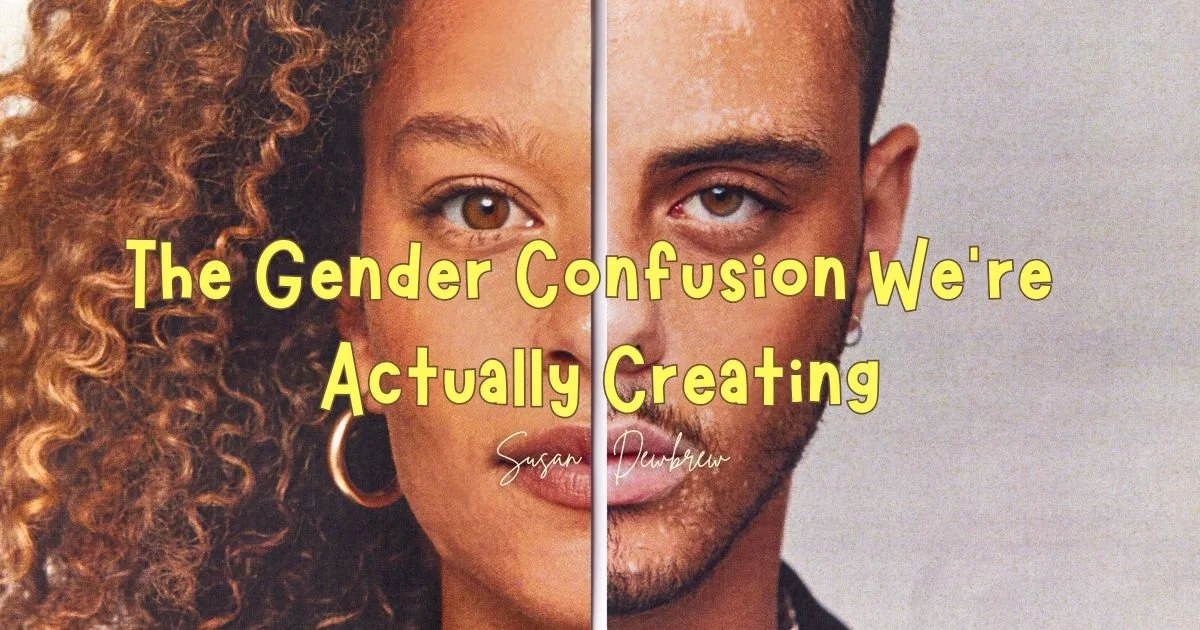
There's a painful irony I need to address: The very people who are most alarmed about gender confusion in our culture may be unwittingly contributing to it.
When we create rigid, narrow definitions of masculinity and femininity—when we insist that certain traits, behaviors, and roles are exclusively male or female—we set people up for profound confusion about who they are.
The Pigeonhole Problem
Let me give you an example. We generally say men are stronger than women, right? More body mass, more muscle. In most cases, that's true.
But the minute you make physical strength a defining characteristic of masculinity versus femininity, you create a problem. What about my daughter, who is incredibly strong? She works out, she's athletic, she could probably lift more than many men who don't exercise regularly. Does that make her masculine?
Of course not. She's beautifully, authentically feminine. But if we've defined masculinity by strength, then a strong woman might feel "less feminine" or a less-strong man might feel "less masculine."
And that's where the confusion begins.
When Definitions Become Elusive
Here's what happens when we try to make gender definitions too rigid: They actually become elusive. Impossible to pin down. Because not everybody fits into every exact category in every season of life.
A man who is emotionally expressive—is he less masculine? A woman who is decisive and strong-willed—is she less feminine? A man who loves cooking? A woman who excels in business?
We've created these boxes that real human beings can't fit into. And when someone doesn't fit, they start to wonder: "If this is what a man is supposed to be and I'm not that, then what am I?"
The Emotional Strength We've Labeled Weakness
Women can often carry more emotional weight than men. That's actually a strength, not a weakness. But for centuries, we've been trained to see emotion as a sign of weakness.
So what happens? Men learn to turn off their emotions because expressing them would make them seem "feminine"—and we've decided feminine equals weak. But emotions aren't feminine! They're human. Jesus wept. Jesus felt compassion. Jesus expressed righteous anger.
When a man starts exhibiting emotions and we tell him to "man up" and stuff them down, we're not protecting his masculinity—we're damaging his humanity.
The Dangerous Logic
Here's the dangerous logic that plays out: "If masculine means X, and I'm not X, then I must not be masculine. If I'm not masculine, then maybe I'm actually feminine. If I'm feminine but in a male body..."
Do you see how the rigid categories we've created can lead someone down a path of genuine confusion?
I am not being hateful toward anyone struggling with gender identity. My heart genuinely goes out to anyone who is uncomfortable with who they are, anyone who would go to such extremes seeking to feel at home in their own skin.
But I have to ask: Were they made to feel that way partly because we pressured them to fit into stereotypes they were never created to fit into to begin with?
What Masculinity and Femininity Actually Are
So what are masculinity and femininity if not these rigid categories we've created?
They're beautiful aspects of how God created humanity. Men and women have real differences—biological, often emotional, sometimes in how we process and experience the world. But these differences are meant to complement each other, to enrich our partnerships, not to establish power hierarchies or put people in boxes.
It's important for women to show strength. It's important for men to show emotion. The ebbing and flowing, the give and take—that's what creates wholeness.
When we try to pigeonhole people, we don't preserve gender—we create gender confusion.
The Fruit of Our Theology
Here's something complementarians need to face: What is your theology producing?
I had to face this question when I realized my beliefs about hierarchy were contributing to abuse, to women being silenced, to gifts being suppressed. I didn't like what I saw. I had to walk out of it.
And I'm not being mean or aggressive when I say this—I'm speaking from experience of having been there. But we do need to face the consequences of what we teach.
When we teach rigid gender roles based on hierarchy, we're seeing:
Gender confusion increase, not decrease
Young people rejecting faith because they can't fit the mold
Women and men both feeling trapped in roles that don't reflect who they are
Medical interventions on children's bodies in desperate attempts to "fix" what we made them feel was broken
I'm not saying complementarian theology is the only cause of these issues. But I am saying we need to honestly examine whether our teaching is helping or hurting.
The Freedom to Be Fully Human
What if instead of rigid gender roles, we gave people freedom to be fully human?
What if we told boys: "You can be strong. You can be emotional. You can be analytical. You can be nurturing. All of these are part of being human, and none of them make you less of a man."
What if we told girls: "You can be gentle. You can be fierce. You can be a leader. You can be a supporter. All of these are part of being human, and none of them make you less of a woman."
What if we let people discover their authentic selves—the unique blend of traits and gifts God put in them—without forcing them into pre-determined categories?
I believe we'd see a lot less confusion, not more.
The Heart of the Matter
The issue isn't that we recognize differences between men and women. The issue is when we weaponize those differences to create hierarchies and rigid roles.
The issue is when we make maleness or femaleness about conforming to cultural stereotypes instead of about the beautiful diversity within each gender.
The issue is when our theology makes people feel like they have to choose between being authentic and being godly.
God created masculinity, and authentic masculinity is incredibly powerful—and there's nothing toxic about it. God created femininity, and authentic femininity is remarkably strong—and there's nothing weak about it.
But both exist within a spectrum of human experience that's far richer and more complex than our boxes can contain.
An Invitation
If you've been taught rigid gender roles and you're seeing the damage they cause—the confusion, the pain, the people walking away from faith—I invite you to consider that there might be another way.
Not a way that erases distinctions, but a way that celebrates the full humanity of both men and women without forcing them into predetermined molds.
The Kingdom way. The way of freedom. The way where truth actually sets people free to be who God created them to be.
Have you experienced the freedom of being fully human without rigid gender constraints? Or have you felt trapped by expectations that didn't fit who you are? Share your story in the comments—your experience matters.
Blessings,
Susan 😊