
When 'Leadership' Became a Four-Letter Word: Rethinking Kingdom Authority
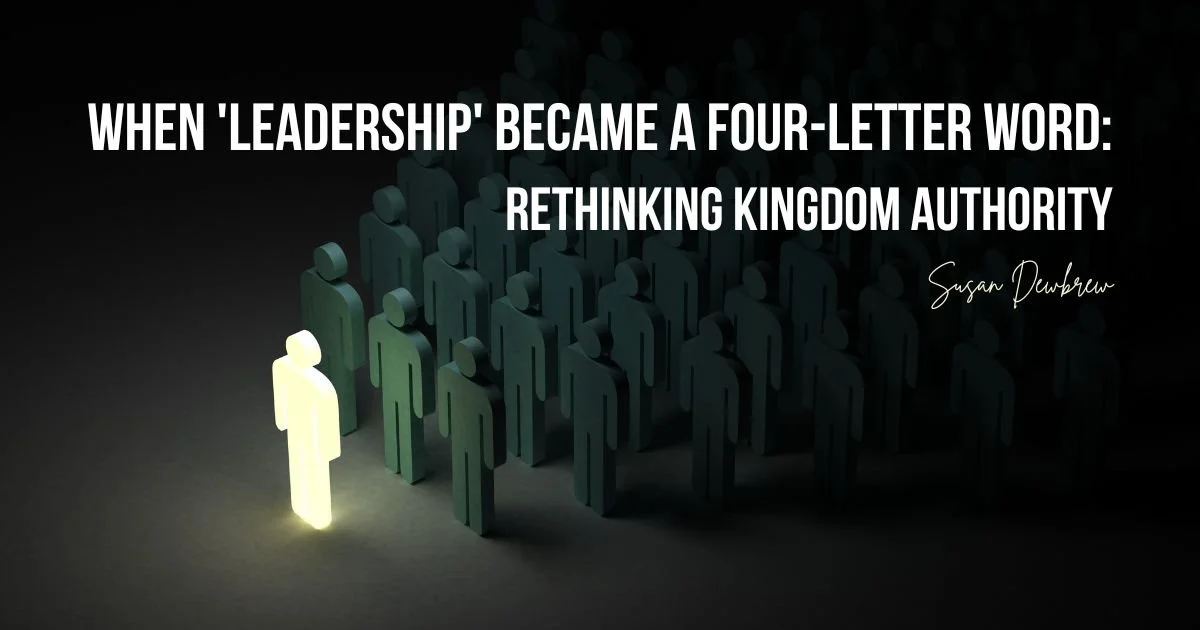
One of the most common critiques I hear about egalitarian teaching is this: "You're saying there's no leadership! Someone has to be in charge!"
I understand why people think this. When you've spent your whole life in a world organized by power pyramids—where leadership means being at the top, having the final say, and others serving you—it's almost impossible to imagine any other way.
But here's what we're actually saying: Yes, there is leadership. No, it doesn't look like the world's version.
The Cornerstone That Became a Stumbling Block
The New Testament quotes the "cornerstone" verse from Isaiah five times. Five times! Why? Because it was the stumbling block. The Jews wanted Jesus to be their king like other nations had kings. They wanted Him up on top of the pyramid where they could point to Him and say, "See? We know Him! That gives us significance and power."
But Jesus didn't come as the capstone sitting on top. He came as the cornerstone—the foundation stone at the base that everything else builds upon.
This completely revolutionized what leadership means. In the Kingdom, leaders aren't the grand poobah at the top being served by everyone below. They're the cornerstone at the bottom, carrying the weight, doing the hard work, lifting others up.
When Jesus said, "I didn't come to be served, but to be the servant of all" (Mark 10:45, NKJV), He wasn't just being humble. He was redefining the entire structure of authority.
The System That Creates Envy and Strife
Paul tells us that the world's hierarchical structure "creates envy and strife and every evil thing" (James 3:16, paraphrased). Think about it: In a power pyramid, your value comes from how far above others you can climb. You're constantly comparing, competing, striving to be near the powerful ones.
Nobody fights to be at the bottom of that pyramid. Nobody says, "Oh please, let me carry more weight and responsibility to help others!" Because in that system, being low means being less than.
But in God's Kingdom, the opposite is true. Those who want to be great go low (Matthew 20:26-27, NKJV). They carry weight. They serve. They lift others up. And that doesn't create envy—it creates gratitude. It creates a sense of worth. It creates a multiplication of strength as people who've been lifted up turn around and lift others.
What Leadership Actually Looks Like
So let me be crystal clear: We absolutely believe in leadership. But it's not a rigid role assigned by gender. It's not a permanent position where one person always has authority.
In our church, for example, who preaches on Sunday? That's a responsibility I carry. I don't open it up for a vote every week. Leadership exists.
But here's the difference: In the Kingdom Council meetings at our church, I'm not the one leading—someone else carries that authority. When I walk into those meetings, I don't suddenly take over just because I'm in the room. I submit to the leadership structure that's already there. My role is to facilitate their authority, to help them do that job really well.
That's apostolic leadership—helping others function in their gifts and callings, not controlling them.
The Dance of Leadership in Marriage
The same is true in marriage. Gregory and I both lead. We defer to each other. There are areas where I have greater strengths, and areas where he does.
Sometimes I'm taking the lead and he's supporting—"Babe, what do you think?" And he says, "Well, this is what I think," and I say, "Okay, let's do that." I come into agreement with him. He's leading in that moment.
It's not just domestic stuff either. I mean, yes, if we're buying paper towels, I'll probably make that decision. But she makes profound spiritual decisions too—about our family, about ministry, about people.
I'm often naive about people. I trust too easily. Gregory isn't like that. His perception and discernment are razor-sharp. So I defer to him on people decisions. I've learned to say, "Babe, I don't see it that way, but you've been right so many times and I've been wrong. I trust you. I'm going with you."
And how many times has he proven to be right?
This is leadership—but it's fluid. It's based on wisdom, gifting, and Holy Spirit's leading, not on who has the Y chromosome.
Where Complementarianism Goes Wrong
The problem with complementarian teaching isn't that it recognizes leadership. The problem is that it hardens those roles. It says the man is always the leader by definition of being a man. The woman is always the follower by definition of being a woman.
It takes something fluid and alive in the body of Christ and petrifies it. Calcifies it. Makes it rigid and dead.
And when you make gender roles that rigid, you actually create confusion. If "man" means strong and "woman" means emotional, what happens to strong women and emotional men? If "man" means leadership and "woman" means submission, what happens when her wisdom is clearly what's needed in that moment?
The system forces people into boxes they were never created to fit into.
The Freedom to Lead and Follow
True Kingdom leadership creates freedom, not constraints. When both partners know they can lead when their gifts are needed and follow when the other's gifts are better suited, there's no power struggle. There's no resentment. There's no pretending.
Both can be fully themselves—strong when strength is needed, vulnerable when vulnerability serves, leading when leadership is required, following when following is wise.
This isn't chaos. This is how the body of Christ was designed to function. "When you come together, each one has a hymn, a lesson, a revelation, a tongue, or an interpretation" (1 Corinthians 14:26, ESV). Everyone plays a part. Everyone contributes their gifts.
Leadership isn't about being the boss. It's about facilitating the beautiful dance of mutual submission where everyone gets to shine in their God-given strengths.
An Invitation to Rethink
If the idea of fluid leadership feels threatening or confusing, I understand. I've been there. When you've only known the pyramid, it's hard to imagine the circle.
But I invite you to look at Jesus again. Look at how He led—by washing feet, by serving, by lifting others up. Look at how Paul described church leadership—as equipping the saints for the work of ministry, not as controlling them (Ephesians 4:11-12, NKJV).
The Kingdom is breaking in. And in God's Kingdom, leadership looks like love.
Blessings,
Susan 😊