
When the Animals Came Marching By: The Real Purpose of the Parade
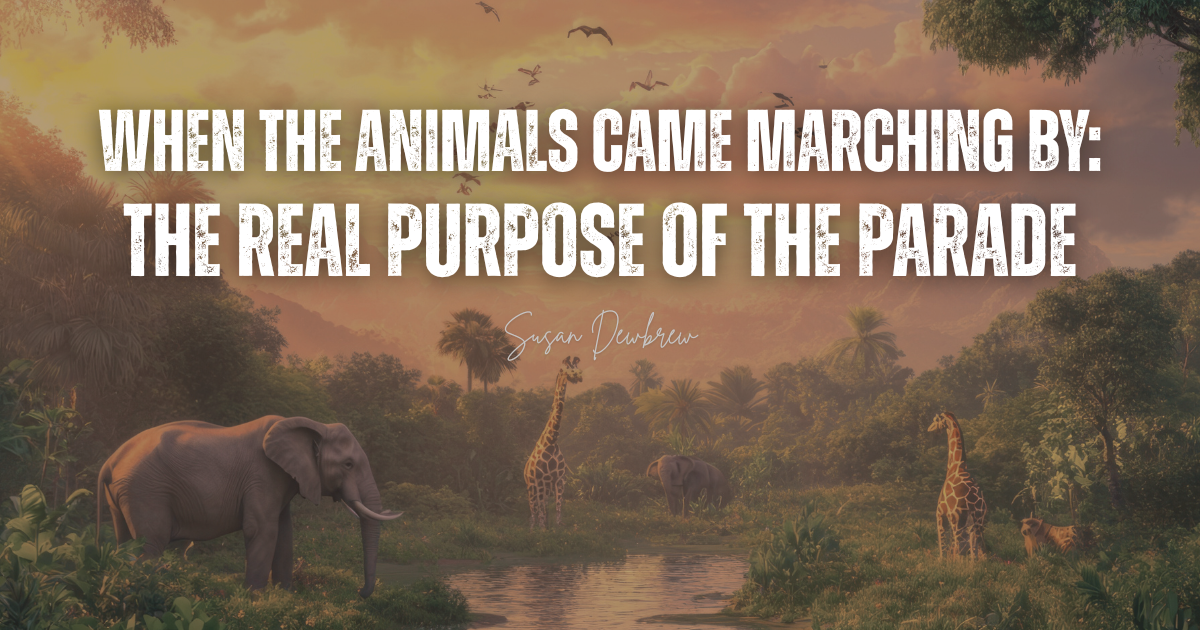
Some complementarians actually teach that God paraded animals past Adam to see if any would make a suitable helper. When I first read that interpretation, I thought, "You've got to be kidding me."
Picture it: God creates the man, sees that he's lonely, and thinks, "Hmm, maybe I can spare him the major surgery. Let me see if a cow or a sheep might work as his companion instead!"
This interpretation always struck me as not just bizarre, but completely missing the point of what was actually happening in Genesis 2. The animal parade wasn't God's attempt to find Adam a girlfriend among the livestock—it was something far more profound and purposeful.
The Wild Complementarian Interpretation That Backfired
The complementarian argument goes like this: God said He would make a helper suitable for Adam. Then "out of the ground the Lord God formed every beast of the field and every bird of the air, and brought them to Adam to see what he would call them" (Genesis 2:19, NKJV). After Adam named all the animals, verse 20 tells us, "but for Adam there was not found a helper comparable to him."
From this, some complementarians conclude that God was testing whether any animals might serve as Adam's helper. When none proved suitable, God then proceeded to create woman from Adam's rib.
But this interpretation creates more problems than it solves:
It makes God seem incompetent - As if the Creator of the universe needed to experiment to figure out what would work
It suggests woman was Plan B - Only created after the animal option failed
It misses the Hebrew grammar - The text doesn't actually say God brought the animals to Adam to test them as helpers
It ignores the obvious - Of course animals wouldn't be suitable human companions!
When I encountered this interpretation, it actually pushed me away from complementarian arguments rather than convincing me. Circular reasoning and strained interpretations like this made me realize they were trying to massage the text to support their predetermined conclusions.
What Was Really Happening During the Animal Naming
So if God wasn't conducting a bizarre dating service for Adam, what was actually happening during the animal parade?
First, let's recognize that this was a significant creative event. "Whatever Adam called each living creature, that was its name" (Genesis 2:19, NKJV). This wasn't just labeling—this was prophetic, participatory creation. Adam was partnering with God in bringing order and identity to the animal kingdom.
But there's something else crucial happening here that the complementarian interpretation completely misses: every single animal that paraded past Adam came in pairs.
Why Every Creature Came in Male and Female Pairs
Here's what I believe was the real purpose of the animal parade: to help Adam recognize what was missing from his own existence.
Every animal that came before Adam—every lion and lioness, every stallion and mare, every rooster and hen—demonstrated the pattern of male and female partnership that God had built into creation. As Adam observed and named each pair, he would have seen the beautiful complementarity, the obvious partnership, the natural companionship between male and female in every species.
To my knowledge, there's not an exception to this pattern. Every creature (excluding some microscopic life) comes in male and female. As Adam participated in this naming ceremony, watching pair after pair of animals, the pattern would have become unmistakable.
Eventually, it would probably dawn on him: "God, You're not alone—You exist in Trinity, perfect relationship and fellowship. The animals aren't alone—they each have their perfect counterpart. But I'm alone. There's no one else like me."
This wasn't God trying to find Adam a suitable helper among the animals. This was God helping Adam recognize his incompleteness so he would appreciate what was about to happen next.
The Profound Loneliness of Being 'Separated from Your Whole'
The Hebrew word for "alone" in Genesis 2:18 is fascinating. It means "a part separated from its whole." This gives us crucial insight into what was actually wrong.
Adam wasn't lonely in the way we typically think of loneliness—missing external companionship. He was incomplete because something that should have been there was missing. The feminine aspect of humanity was present but subsumed, lost inside him, unable to express herself or participate in fellowship.
When God said, "It is not good for man to be alone," He wasn't looking at a male human who needed a female companion. He was looking at humanity itself—Adam, which means "human"—and recognizing that this being was separated from its whole.
The animal parade served to highlight this incompleteness. As Adam watched pair after pair of creatures who were obviously designed for each other, who complemented each other perfectly, who were complete as a unit, he would have begun to understand what was missing from his own existence.
This is why the passage says, "but for Adam there was not found a helper comparable to him" (Genesis 2:20, NKJV). It's not that God was looking among the animals for Adam's helper—it's that the parade made it obvious that Adam had no counterpart, no equal partner, no "helper comparable to him."
How True Partnership Restores Wholeness
What happened next wasn't God creating something entirely new. It was God completing what He had already begun.
"And the Lord God caused a deep sleep to fall on Adam, and he slept; and He took one of his ribs, and closed up the flesh in its place. Then the rib which the Lord God had taken from man He made into a woman, and He brought her to the man" (Genesis 2:21-22, NKJV).
The Hebrew word translated "rib" is "tsela," which everywhere else in the Old Testament means "side," "side chamber," or something substantial and structural. This wasn't a minor surgical procedure—this was major surgery requiring God to "close up the flesh" afterward.
What God was doing was drawing out the feminine that was already present within the original human and fashioning her into a distinct, equal partner. The woman wasn't created from scratch—she was revealed, separated out, given her own identity and voice.
Adam's response reveals his recognition of this truth: "This is now bone of my bones and flesh of my flesh; she shall be called Woman, because she was taken out of Man" (Genesis 2:23, NKJV). The Hebrew is even more emphatic: "This time! At last! Here is bone of my bones and flesh of my flesh!"
He wasn't meeting someone new—he was being reunited with the part of himself that had been missing. The wholeness that had been lost was being restored, but now through partnership rather than internal subsumption.
The Pattern That Reveals God's Heart
When we understand the real purpose of the animal parade, we see a beautiful pattern that reveals God's heart for relationships:
1. Recognition of Incompleteness - The parade helped Adam recognize that something was missing. He was the only creature without a counterpart, without partnership, without the completion that comes through relationship.
2. Appreciation for God's Solution - By seeing what he lacked, Adam would fully appreciate what God was about to provide. The woman wouldn't be taken for granted—she would be received as the precious gift she was.
3. Understanding of True Partnership -The animal pairs demonstrated what real partnership looks like—not hierarchy, but complementarity; not dominance, but cooperation; not superiority, but mutual dependence and support.
4. Preparation for Unity - The parade prepared Adam to understand that true wholeness comes not through isolation but through unity—"Therefore a man shall leave his father and mother and be joined to his wife, and they shall become one flesh" (Genesis 2:24, NKJV).
Beyond the Garden: The Pattern for All Relationships
The lesson of the animal parade extends far beyond Adam and Eve. It reveals God's pattern for all human relationships:
We are designed for partnership, not isolation. Just as it wasn't good for the human to be alone, we are created for community, for relationship, for the mutual support and encouragement that comes through authentic fellowship.
We need each other's unique contributions. Just as each animal pair brought different strengths and perspectives, we each have unique gifts that complement others. No one person has everything needed for success or wholeness.
True completion comes through unity, not hierarchy. The animal pairs didn't demonstrate dominance and submission—they demonstrated partnership. True completion in relationships comes through mutual support, not one person controlling the other.
God's design is always better than our substitutes. Adam could have remained incomplete, settling for the limited fellowship possible with animals. But God had something far better in mind—a partner who could truly correspond to him, understand him, and complete him.
The Parade That Changes Everything
When we understand the real purpose of the animal parade, it changes everything about how we read the creation account. This isn't a story about God experimenting with different helper options for Adam. It's a story about God methodically preparing humanity to appreciate the gift of partnership.
The parade wasn't about finding Adam a suitable helper among the animals—it was about helping Adam recognize that he needed a helper, and that only someone who truly corresponded to him could fill that role.
This understanding transforms our view of relationships:
Marriage becomes about mutual completion rather than male authority
Partnership becomes the goal rather than hierarchy
Differences are celebrated as complementary rather than ranked as superior/inferior
Unity is pursued through cooperation rather than dominance
The animals that came marching by weren't potential wives for Adam—they were living demonstrations of God's design for partnership. They showed Adam what he was missing and prepared him to receive the gift God was about to give.
When we grasp this truth, we stop seeing the woman as Plan B after the animals didn't work out. Instead, we see her as God's crowning creation, the partner who would complete humanity's reflection of God's own image—Trinity in unity, diversity in fellowship, strength through mutual support.
A Parade Worth Remembering
The next time you read about the animal parade in Genesis 2, remember what was really happening. God wasn't playing matchmaker between Adam and the livestock. He was preparing humanity to understand and appreciate the beautiful gift of partnership.
Every creature that marched by demonstrated the pattern: male and female, designed for each other, completing each other, stronger together than apart. And when the parade was over, Adam finally understood what he'd been missing—not an animal companion, but his true counterpart, his equal partner, his completion.
This is the God who thinks of everything, who prepares our hearts to receive His gifts, who doesn't just meet our needs but helps us understand and appreciate what He's providing. The animal parade reveals not a God who experiments with different options, but a God who orchestrates every detail to reveal His perfect design for human relationships.
Have you ever felt like something was missing in your relationships, only to discover that God had something far better in mind than what you thought you needed? The story of the animal parade reminds us that God's plans are always better than our substitutes.
Blessings,
Susan 😊