
When the Church Becomes a Pyramid: Why Kingdom Relationships Look Different
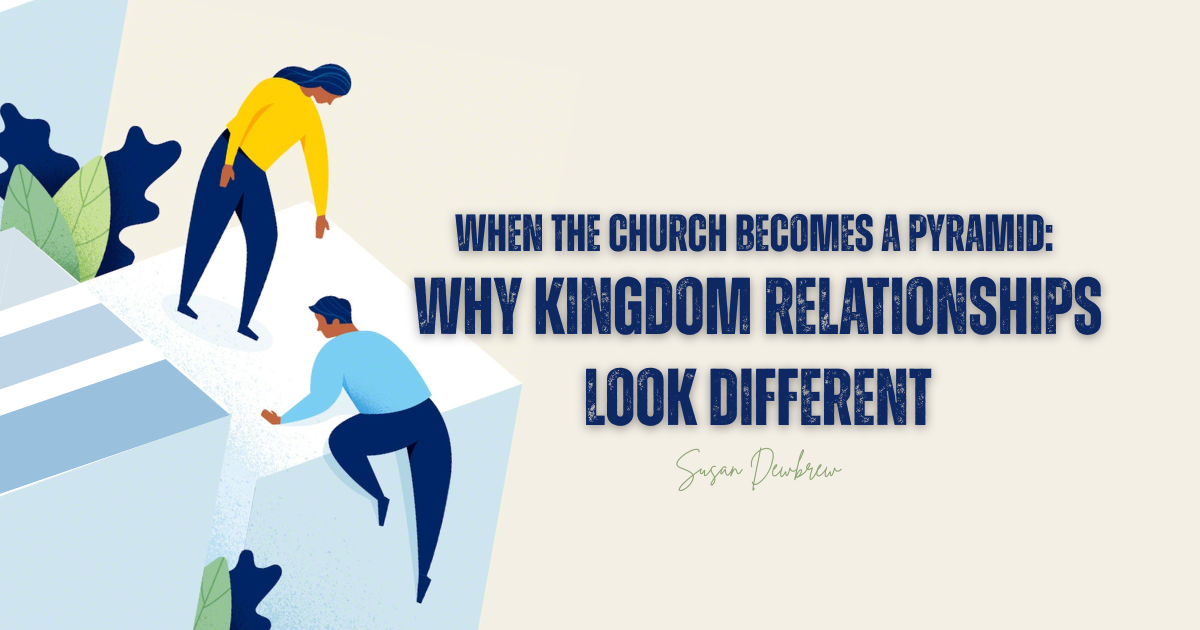
I've been in enough churches over the years to recognize a particular dynamic that breaks my heart every time I see it. It happens when well-meaning believers, hungry for their calling in Christ, walk into a church environment and immediately start positioning themselves to get close to the leadership.
They're not necessarily bad people or manipulative people. They're often sincere believers who genuinely sense their calling but have bought into a false paradigm about how the Kingdom works. And that false paradigm is destroying the unity that's supposed to be our greatest witness to the world.
The Pyramid Mindset
Here's what I see happening: people walk into church carrying the world's pyramid-style power structure in their minds. In the world's system, success means rising above others, getting close to those in power, and positioning yourself for advancement up the chain of command.
So when these believers sense their calling—and every born-again person does sense they have a calling in Christ—they look around the church and think, "Okay, how do I rise to the top here? How do I get close to the pastor, the worship leader, the prominent speakers? How do I position myself to be noticed and elevated?"
The tragic part is that they've completely misunderstood what the Kingdom is and where it operates. They think the Kingdom only happens at church, so church becomes the place where they have to make their mark, gain their significance, and fulfill their calling.
But here's the truth: the Kingdom is everywhere. It's in your workplace, in your school, in your home, in your neighborhood. Church is just one expression of the Kingdom, not the totality of it.
The Competition That Destroys Unity
When multiple people in a church environment are operating from this pyramid mindset—all trying to get close to the powerful ones, all vying for positions of influence, all competing for recognition—it creates exactly what Paul warned against in his letters: envy, strife, jealousy, competition, and every evil thing.
I've watched churches that started with genuine love and unity gradually become political environments where people are constantly maneuvering for position. Small groups become networking opportunities. Volunteering becomes resume-building. Relationships become strategic rather than authentic.
The saddest part is watching people's gifts get twisted in this environment. Someone with a genuine prophetic gift starts using their revelations to gain influence rather than serve the body. Someone with leadership abilities starts building their own following rather than supporting the overall vision. Someone with teaching gifts starts positioning themselves as the next speaker rather than faithfully serving wherever they're needed.
The False Expectation That Kills Relationship
This pyramid thinking also creates completely unrealistic expectations about what church relationships should provide. People walk in expecting the leadership to fix them, serve them, be their best friend, meet all their needs, and basically function as their personal spiritual guides.
But that's not how healthy relationships work, and it's certainly not how the body of Christ is designed to function.
If you're expecting the pastor to be your best friend, you're going to be disappointed. If you're expecting the church leadership to meet all your emotional and spiritual needs, you're setting everyone up for failure. If you're expecting to have the same level of intimacy with the platform speakers that you have with your spouse or closest friends, you're going to end up hurt and disillusioned.
What Kingdom Relationships Actually Look Like
In God's Kingdom, the power structure is completely different. Jesus made this clear when He told His disciples, "You know that the rulers of the Gentiles lord it over them, and their high officials exercise authority over them. Not so with you. Instead, whoever wants to become great among you must be your servant."
In Kingdom relationships:
Authority means responsibility to serve, not privilege to be served
Leadership means lifting others up, not being elevated above them
Success means bringing everyone up together, not rising above others
Power flows in all directions through mutual submission, not down from the top
When people understand this, they come into church environments with a completely different mindset. Instead of thinking, "How can I get close to the powerful people?" they're thinking, "How can I contribute to what God is doing here? How can I use my gifts to serve others? How can I build authentic relationships at appropriate levels?"
The "Get To" Versus "Have To" Mindset
One of the most beautiful shifts I've seen in people is when they move from a "have to" mindset to a "get to" mindset about serving and relationships.
In the pyramid system, people feel like they "have to" do certain things to maintain their position or advance their standing. They have to volunteer for the right ministries, have to be seen with the right people, have to say the right things at the right times.
But in Kingdom relationships, service flows from genuine love and calling. It becomes a "get to" rather than a "have to." You get to use your gifts. You get to contribute to something bigger than yourself. You get to be part of what God is doing without having to prove your worth or earn your place.
Finding Your Tribe at the Right Level
Here's what I've discovered about healthy church relationships: you don't need to be best friends with everyone, and you certainly don't need to be in the inner circle of leadership to fulfill your calling.
What you need is to find your tribe—the people who share your heart for particular aspects of God's Kingdom. Maybe you have a heart for evangelism, or for serving the poor, or for worshiping in a particular way, or for teaching children. You'll naturally connect with others who share that passion.
These connections often happen in the middle circles of relationship rather than the innermost ones. You might develop wonderful partnerships with people you're not intimately close to but who share your vision and complement your gifts.
The Beautiful Alternative
When churches function according to Kingdom principles rather than worldly pyramid structures, something beautiful happens. Instead of competition, you get collaboration. Instead of positioning, you get authentic service. Instead of envy, you get celebration of each other's gifts.
People stop trying to impress the leadership and start trying to bless the body. They stop maneuvering for position and start looking for places to contribute. They stop viewing others as competition and start seeing them as partners in the Kingdom.
The unity that results from this shift is incredibly powerful. When people are secure in their calling and clear about their role, when they're serving from love rather than ambition, when they're building authentic relationships rather than strategic ones—that's when the church actually looks like Jesus to the world.
The Leader's Role in This Transformation
If you're in leadership, you have a crucial role in creating this kind of environment. You can't control how people approach you, but you can be clear about your boundaries and consistent about your values.
Don't reward the pyramid climbers with special access or attention. Don't feed the political dynamics by playing favorites. Do reward faithful service regardless of whether it happens in the spotlight. Do model the servant leadership that Jesus demonstrated.
Most importantly, help people understand that their significance doesn't come from proximity to you but from their relationship with Jesus and their contribution to His Kingdom—wherever that might be.
The Kingdom Is Bigger Than Church
One of the most liberating truths for believers to grasp is that the Kingdom of God is so much bigger than what happens on Sunday morning. Your calling might be primarily in your workplace, in your family, in your community, or in some area of service that has nothing to do with church leadership.
When people understand this, they stop viewing church as the place where they have to make their mark and start seeing it as one place where they can be refreshed, equipped, and connected with other believers who are also advancing the Kingdom in their own spheres.
This takes so much pressure off church relationships and allows them to develop more naturally and healthily.
Have you experienced the difference between pyramid-style church environments and Kingdom-centered ones? What did you notice about the quality of relationships in each? I'd love to hear your observations.
Blessings,
Susan 😊