
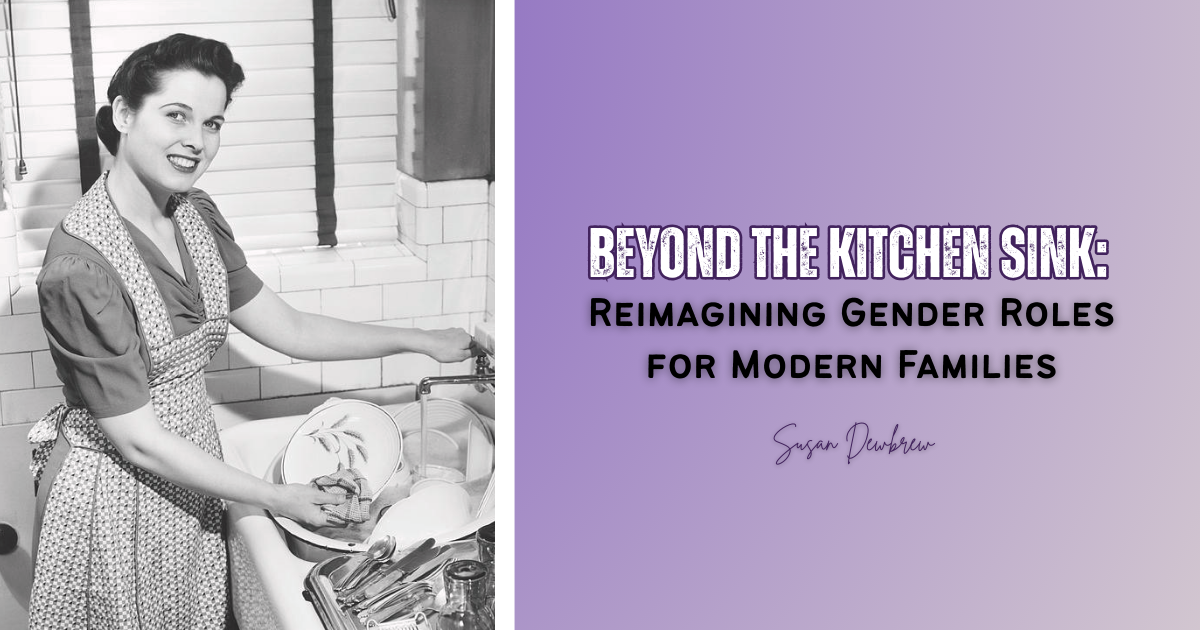
Beyond the Kitchen Sink: Reimagining Gender Roles for Modern Families
I'll never forget the first time I sat in that oil change waiting room, fighting back tears because I was convinced the mechanics were going to take advantage of me. My father had drilled it into me that as a female, I knew nothing about cars and therefore would be easy prey for unscrupulous repair shops.
When the technician came out and told me my cabin air filter was "horrible" and needed replacing, I panicked. The cabin has an air filter? I thought. I had no idea what he was talking about, so I told him I couldn't purchase it that day. He said it was so dirty he couldn't put it back in, so I left without it entirely.
As I drove home with no cabin air filter, I had a revelation that changed everything: I had a false expectation that Gregory should be doing this for me. Not because we'd agreed to it when we got married—we hadn't made any such contract. It wasn't written on his birth certificate either (I checked!). I was imposing a cultural gender role onto our relationship and building resentment when he didn't automatically fulfill it.
The Problem with "Should"
The word "should" is dangerous in marriage. It's the breeding ground for resentment and the enemy of genuine partnership. When we operate from "should," we're not operating from love—we're operating from obligation and expectation.
Gregory had taught his daughter how to change a tire and even change her oil. He saw car maintenance as a life skill, not a gender-specific duty. But I had been programmed to see it as "man's work," which meant I'd never learned and therefore lived in fear of anything automotive.
This wasn't about Gregory not caring for me—it was about me refusing to take responsibility for adult life skills because of arbitrary gender assignments.
When Roles Become Rigid
In our household, we've learned that healthy relationships require flexibility, not rigid role assignments. Yes, there are things Gregory naturally handles more often—like anything involving tools or dead mice in the garage. And there are things I tend to handle—like contracts and financial planning. But these divisions happened organically based on our gifts and preferences, not because of our chromosomes.
The difference between healthy division of labor and toxic gender roles is choice. When I cook dinner, it's because I get to, not because I have to. There are plenty of days when I'm busy with work or simply tired, and Gregory is perfectly capable of fixing us food. It's not "helping me out"—it's participating in our shared life.
The Freedom of Flexibility
One of the most beautiful aspects of mutual submission in marriage is how it allows for different seasons. Early in our marriage, I went through a period where I wasn't well and couldn't work. Gregory carried us 100% financially without complaint—not once did he make me feel guilty or pressure me to "hurry up and get a job."
Later, when I built Dewbrew Realty and became the primary breadwinner, Gregory never made it about his ego or demanded I take on additional household duties to "balance things out." We were both all-in, figuring it out as we went, supporting each other through different seasons of life.
Currently, we're raising our granddaughter again. The beauty of our approach is that parenting responsibilities flow naturally based on who's available, who has the right energy for the moment, and what she needs. It's not "mom duties" and "dad duties"—it's family life.
Breaking Free from Cultural Programming
Even after years of practicing mutual submission, we still catch ourselves falling into old patterns. Just recently, Gregory unloaded the dishwasher and commented that he "wanted to help me out." I gently corrected him: "Help us out. It's not my job—it's our job."
This wasn't about being pedantic—it was about recognizing how deeply cultural programming runs. Even with the best intentions and years of growth, we can slip into thinking that certain tasks "belong" to certain people based on gender rather than partnership.
A Different Way Forward
What would it look like if we approached household responsibilities like a good business partnership? Partners don't think in terms of "helping each other out"—they think in terms of shared ownership and mutual investment. They divide tasks based on strengths, availability, and what serves the common goal.
In a Kingdom-centered marriage, the common goal isn't maintaining traditional roles—it's creating a thriving family environment where everyone can flourish. Sometimes that means I change the cabin air filter (yes, I eventually learned how). Sometimes it means Gregory does laundry. Most of the time, it means we're both willing to do whatever needs doing without keeping score.
Moving from Formula to Flow
The religious world loves formulas, but relationships aren't math problems. They're living, breathing partnerships that require flexibility, communication, and a willingness to grow. When we try to force our marriages into predetermined roles based on gender, we miss the beautiful dance of two people learning to serve each other out of love rather than obligation.
The goal isn't to eliminate all division of labor—that would be impractical and inefficient. The goal is to ensure that our divisions are based on wisdom, gifts, and mutual agreement rather than cultural assumptions about what men and women "should" do.
The Invitation
If you find yourself struggling with resentment over household responsibilities, ask yourself: What expectations am I carrying that were never actually agreed upon? What "shoulds" am I imposing on my spouse that might be more about cultural programming than Kingdom principles?
The journey from role-based to relationship-based marriage isn't always easy, especially when you're swimming against cultural currents that run deep. But it's worth it. When both partners know they're valued for who they are rather than the roles they fill, when both can contribute their full gifts without artificial constraints, the marriage becomes more resilient, not less.
It starts with something as simple as sharing responsibility for the dishes—or learning to change your own cabin air filter. Because in God's Kingdom, there's no "men's work" or "women's work." There's just the work of love, shared by two people committed to lifting each other up.
What gender roles have you questioned in your own relationships? What would change if you approached your partnership more like a business collaboration than a collection of predetermined duties? I'd love to hear your thoughts.
Blessings,
Susan 😊