
The 750x Factor: Why Choking Changes Everything
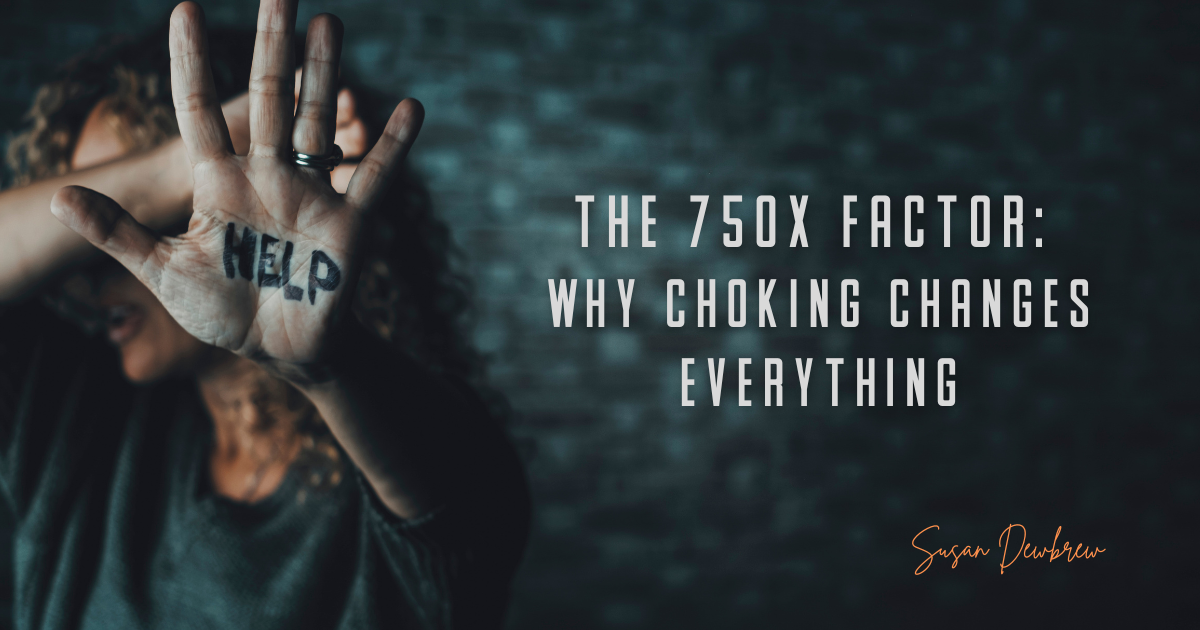
If someone has ever put their hands on your throat or controlled your breath in any way, please hear me: You are 750 times more likely to be killed by that person.
Not 75 times. Not even 750 percent more likely. Seven hundred and fifty times more likely.
Let that number sink in. If we were talking about 100 times more likely, we'd be telling you to run. But 750 times? That's not a red flag—that's a death sentence waiting to happen.
Beyond Bruises and Broken Bones
We've been conditioned to think physical abuse only "counts" if it leaves visible marks. But that's not how the law works, and it's certainly not how trauma works.
In legal terms, if someone on the street raises their hand like they're going to hit you, they've committed assault—a crime that could land them in prison. They don't have to actually strike you. The threat alone is criminal.
If someone pulls a gun on you but doesn't shoot, that's still assault. The threat of violence is violence.
Yet somehow, when these same criminal acts happen inside a home, we minimize them. We call it "just threats" or say "at least he didn't actually hit you."
This is backwards thinking that keeps victims trapped and perpetrators free to escalate.
The Truth About Threats
Physical abuse isn't just about the moment someone strikes you—it's about the ongoing climate of fear and control that threats create.
I lived this reality. My ex-husband never left bruises, but he crossed every other line. The threat was always there, hovering like a storm cloud over our household. That underlying fear—knowing what this person was capable of—controlled my behavior just as effectively as if he'd been hitting me regularly.
When you live with someone who has demonstrated they're willing to use force or intimidation to get their way, you don't need daily reminders. That one incident becomes a constant presence in your decision-making. You find yourself avoiding topics, monitoring your tone, walking on eggshells to prevent another explosion.
That's not marriage. That's hostage-taking.
The Spectrum of Physical Abuse
Physical abuse includes far more than what most people realize:
Blocking exits - Preventing you from leaving during an argument is physical abuse. They're controlling your body, trapping you against your will.
Disturbing your sleep - Repeatedly waking you up or preventing you from sleeping as a way to control and disorient you.
Driving recklessly - Putting you and your children in danger because they're angry, knowing you're afraid for your lives.
Throwing objects - Whether they hit you or not, using objects as weapons creates fear and demonstrates what they're capable of.
Preventing medical care - Stopping you from getting treatment when you're injured or sick.
Any unwanted physical contact - Grabbing, pushing, restraining, or touching you in ways meant to intimidate or control.
All of these behaviors are designed to send the same message: "I have power over your body, and I'm willing to use it."
The Choking Reality
Here's why choking (or "non-lethal strangulation" as experts call it) is such a critical indicator: It takes the same psychological capacity to put your hands around someone's throat as it does to kill them.
When someone is willing to cut off your air supply—to hold your life literally in their hands—they've crossed a line that most people never cross. They've demonstrated they're capable of the ultimate act of control: taking your life.
The statistics bear this out. That 750x multiplier isn't theoretical—it's based on real data from real homicides. Women who reported being choked by intimate partners were overwhelmingly more likely to be killed by those same partners.
If this has happened to you, please understand: This isn't about forgiveness or working it out or giving them another chance. This is about survival.
The Gun Factor
Here's another statistic that should terrify anyone in an abusive relationship: If there's a gun in a house where abuse is occurring, you're 500 times more likely to become a homicide statistic.
Five hundred times.
Abuse escalates, especially when the victim becomes non-compliant—when they start setting boundaries, seeking help, or planning to leave. Having a weapon easily accessible during that escalation creates a perfect storm for tragedy.
I'm not anti-gun. I own one myself and believe in the right to self-defense. But if you're in an abusive relationship and there are firearms in your home, you need to understand the elevated danger you're facing.
When Control Becomes Deadly
What many people don't understand is that intimate partner homicide rarely happens out of nowhere. It's almost always the final escalation in a pattern of control that has been building over time.
The most dangerous period for an abuse victim is when they try to leave or assert independence. That's when the abuser realizes their control is slipping, and they become desperate to regain it.
This is why safety planning is so crucial. You can't just pack a bag and walk out the door if you're dealing with someone who's already demonstrated they're willing to use violence to control you.
The Choice That Isn't Really a Choice
God won't micromanage your abuser. If you're praying for God to change your partner, I understand that hope, but you need to hear this: God won't violate their free will, and He won't violate yours.
If you choose to stay and comply, that's your choice. But please understand—you have far more power than you realize, and help is available.
Your abuser wants you to feel powerless. That feeling serves their purpose. But you are not powerless. You have choices, even when those choices feel impossible.
Making a Safety Plan
If you recognize yourself in these descriptions, don't just leave impulsively. Make a plan. Get help from people who understand how these situations escalate.
Contact the National Domestic Violence Hotline at 1-800-799-7233. They can help you create a safety plan that protects you and your children.
Document threats. Save threatening texts or voicemails. Tell trusted friends what's happening. Create a support network before you need it.
If someone has ever choked you or threatened you with a weapon, please don't wait for "next time." There might not be a next time to wait for.
The Bottom Line
Physical abuse isn't just about bruises and broken bones. It's about fear, control, and the deliberate use of intimidation to manipulate someone's behavior.
Threats are not "just" threats. They're criminal acts that create lasting trauma and indicate serious danger.
And if someone has ever put their hands on your throat, you need to understand: You're not dealing with someone who's "just angry" or "has a temper." You're dealing with someone who's capable of killing you.
That 750x statistic isn't meant to frighten you into paralysis. It's meant to give you the clarity you need to take action while you still can.
Your life is worth more than keeping the peace. Your children deserve to grow up free from the terror of intimate partner violence. And God's heart is for your freedom, not your silent suffering.
The truth really does set us free. But first, we have to be willing to see how dangerous our situation really is.
Blessings,
Susan
If you're in immediate danger, call 911. For safety planning and support, contact the National Domestic Violence Hotline at 1-800-799-7233 or visit thehotline.org.