
The Children Are Watching: How Staying "For the Kids" Actually Harms Them
If I could do my life over again, I would have left my first marriage much sooner. The damage that staying did to my children is something I carry with deep regret. I was under the delusion that being in a broken home would ultimately be the worst thing for my children, so I stayed far longer than I should have, thinking I was doing it for them.
But my children weren't living in an intact home. They were living in an abusive home. And there's a world of difference.
I believed one of the most dangerous lies that keeps people trapped in harmful marriages: that staying together, no matter what, is always better for the children. This lie has probably caused more damage to more children than we'll ever fully know.
The Myth of the "Intact" Family
When people talk about staying together "for the children," they're usually envisioning a family that looks whole on the outside—two parents, shared holidays, family photos that suggest everything is fine. They're thinking about avoiding the stigma of divorce, the complications of custody arrangements, the financial challenges of two households.
But what they're often missing is what's actually happening inside that "intact" family.
Children living with domestic violence aren't experiencing the stability and security that the "intact family" is supposed to provide. They're experiencing:
Chronic stress from living in an unpredictable environment
Trauma from witnessing violence or abuse
Confusion about what normal relationships look like
Hypervigilance as they constantly monitor the emotional temperature of the house
Guilt and self-blame when they think they've caused the latest explosion
Fear that they or their protective parent might be seriously harmed
This isn't an intact family. This is a family that's broken on the inside, even if it looks whole from the outside.
Children Absorb Everything
One of the most heartbreaking things I learned in my healing journey is how much children absorb, even when we think we're protecting them from what's happening between the adults.
Children have an amazing ability to sense the emotional climate of their home. They know when tension is building. They can feel the fear in the air. They notice when Mom starts walking on eggshells or when Dad's mood controls the entire household.
Even when the abuse isn't directed at them, children experience what's called "secondary trauma" from witnessing it. Their developing nervous systems stay in a state of chronic stress. They learn that home isn't safe, that love can be dangerous, that people who are supposed to care for you might also hurt you.
I thought I was protecting my children by trying to shield them from the worst of what was happening. I thought as long as they weren't being directly targeted, they would be okay. But children don't need to be directly abused to be harmed by domestic violence.
They're always watching. They're always listening. They're always learning about how relationships work by observing the most important relationship in their world—the one between their parents.
What Children Learn in Abusive Homes
When children grow up witnessing abuse, they absorb lessons that can shape the rest of their lives:
About Love: They learn that love and pain go together, that people who claim to love you might also hurt you, that relationships are unpredictable and potentially dangerous.
About Power: They learn that in relationships, someone has to dominate and someone has to submit, that the stronger person gets to control the weaker one, that might makes right.
About Emotions: They learn that anger is dangerous, that expressing needs might lead to punishment, that their feelings don't matter as much as keeping the peace.
About Safety: They learn to be hypervigilant, always scanning for danger, always ready to hide or flee, never fully able to relax and just be children.
About Worth: They learn that some people deserve to be treated badly, that love isn't something you can count on, that family relationships are something to endure rather than enjoy.
These aren't lessons you can unteach with words. They're absorbed at a cellular level during the years when children's brains and nervous systems are still developing.
The Generational Cycle
Perhaps the most tragic aspect of staying "for the children" is that it often perpetuates the very patterns you're hoping to avoid. Children who grow up in abusive homes are statistically more likely to either become abusers themselves or end up in abusive relationships as adults.
Not because they're doomed to repeat the pattern, but because abuse becomes their normal. They don't develop healthy templates for what relationships should look like. They don't learn that they deserve to be treated with respect, kindness, and consistency.
Boys who watch their fathers abuse their mothers are more likely to become abusers. Girls who watch their mothers accept abuse are more likely to accept it themselves. Both learn that this is just how families work.
I see this pattern playing out in family after family—children who promise themselves they'll never be like their parents, only to find themselves recreating the same dynamics in their own adult relationships because it's what feels familiar.
The Courage to Break the Chain
Getting help for your children means getting yourself whole and healthy. It means having the courage to say, "This isn't what I want my children to learn about love. This isn't the legacy I want to leave them."
Sometimes the most loving thing a parent can do is leave.
I know that's a hard thing to hear, especially if you've been taught that divorce is always wrong or that intact families are always better. But intact doesn't mean healthy. Staying together doesn't guarantee better outcomes for children if the relationship is toxic.
What children need most isn't two parents living under the same roof. What they need is:
Safety and stability
Consistent, loving care
Adults who model healthy emotional regulation
An environment where they can develop and thrive without fear
Examples of what respectful relationships actually look like
Sometimes these needs can be better met in two healthy separate homes than in one unhealthy shared home.
What Healing Looks Like
I'm grateful that it wasn't too late for my children to experience healing, even though damage was done by my staying too long. Here's what I learned about helping children recover from exposure to domestic violence:
Acknowledge the Reality: Don't pretend it didn't happen or that they weren't affected. Children need their experiences validated, not minimized.
Model Healthy Relationships: Show them what respectful, mutual, loving relationships actually look like. Let them see that conflict can be resolved without fear, intimidation, or abuse.
Get Professional Help: Children who've been exposed to domestic violence benefit from therapy with professionals who understand trauma and its effects on developing minds.
Create Genuine Safety: Not just physical safety, but emotional safety where they can express their feelings without fear of causing more problems.
Be Patient with the Process: Healing takes time. Children may struggle with trust, emotional regulation, or relationship patterns for years. That's normal and doesn't mean you've failed.
Break the Silence: Talk age-appropriately about what happened, why it was wrong, and how things are different now. Don't make it a family secret that shame follows them into adulthood.
A New Legacy
When I look at my children now, I see resilient, strong, compassionate people who've learned that cycles can be broken and that healing is possible. But I also see the scars from those years when I thought staying was protecting them.
If I could go back, I would have gotten help sooner. I would have been willing to disrupt the appearance of our intact family in order to give them genuine security. I would have modeled the courage to leave an unhealthy situation instead of the resignation to endure it.
My children deserved better than what they experienced during those years. All children do.
God's Heart for Children
Jesus had strong words about harming children: "Whoever causes one of these little ones who believe in me to sin, it would be better for him if a great millstone were fastened around his neck and he were drowned in the depth of the sea" (Matthew 18:6, ESV).
While this passage is often interpreted in terms of leading children into moral error, I believe it applies to anything that damages a child's ability to trust, to love, to feel safe in the world.
Exposing children to chronic domestic violence—even when we think we're protecting them by staying—causes profound harm to their developing hearts and minds. It teaches them lies about love, relationships, and their own worth that can take decades to unlearn.
God's heart is for children to flourish in safety, to grow up knowing they're beloved, to learn about healthy relationships from the adults who are supposed to protect them.
The Hard Truth About Staying
I know this message is difficult, especially for those who've been taught that divorce is never an option or that staying together always serves children's best interests. But the research is clear: children are harmed more by ongoing exposure to domestic violence than they are by their parents' divorce.
This doesn't mean every difficult marriage should end. It means that when there's a pattern of abuse—when there's ongoing harm being done to the emotional, psychological, or physical wellbeing of family members—sometimes the most Christ-like thing to do is remove children from that environment.
It takes tremendous courage to acknowledge that staying might be hurting your children more than leaving would. It requires challenging deeply held beliefs about marriage, family, and sacrifice.
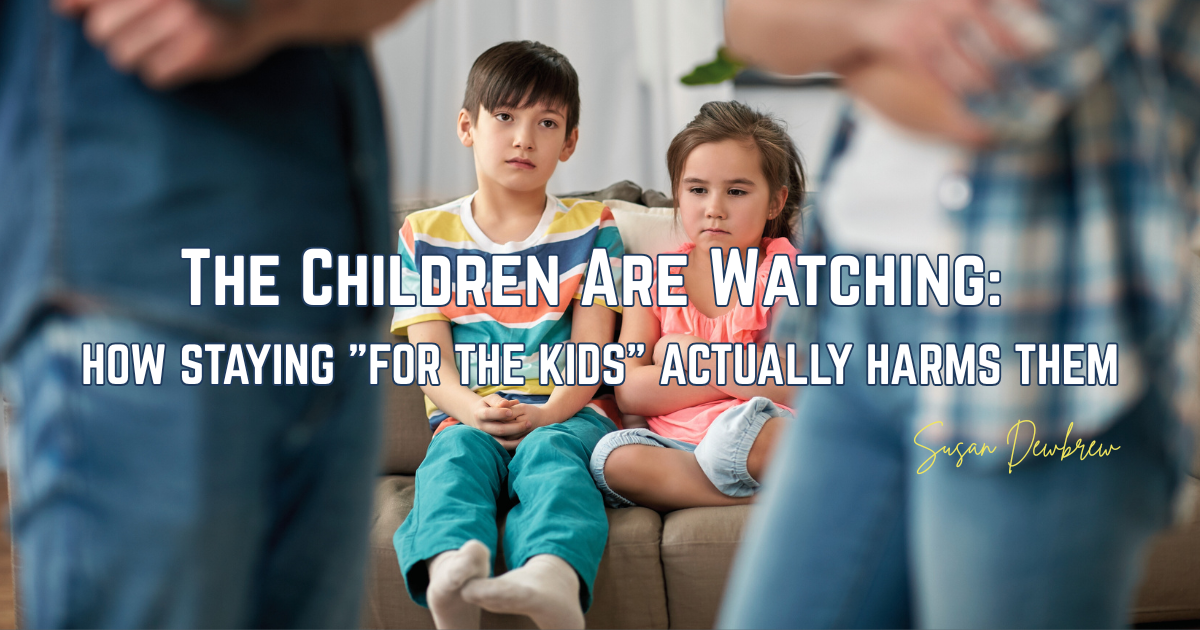
But your children are watching. They're learning. They're absorbing lessons about what love looks like, what they deserve, what's normal in relationships.
What do you want them to learn?
Hope for Healing
If you're in an abusive situation now, please know that it's not too late to change the trajectory for your children. Whether you're able to create safety within your current relationship through genuine change and healing, or whether safety requires leaving, your children can recover from what they've experienced.
Children are remarkably resilient when they're given the support, safety, and love they need. They can learn new patterns. They can experience healing. They can grow up to have healthy relationships themselves.
But healing rarely happens while the trauma is still ongoing. Safety has to come first.
Your children need you to be whole and healthy more than they need you to maintain the appearance of an intact family. They need to see what courage looks like more than they need to see what endurance looks like.
They deserve a legacy of healing, not a legacy of harm.
The chain of generational trauma can be broken. But someone has to be brave enough to break it.
Let it be you. Let it be now. For their sake, and for the sake of the generations that will come after them.
Your children are watching. What do you want them to learn?
Blessings,
Susan 😊