
When Your Enemy Lives Within: The Particular Hell of Domestic Violence
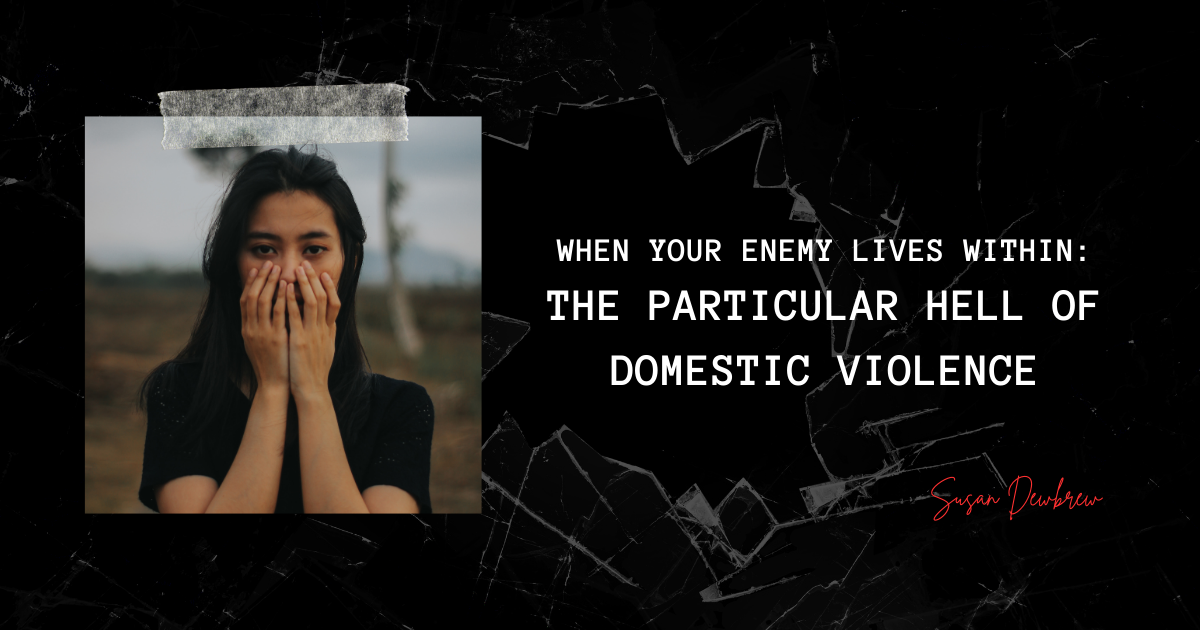
I know what it feels like to live in a home where your enemy is within. Where the person who promised to love and protect you becomes the very source of your fear. Where your own home—the place that should be your sanctuary—becomes a battlefield where you're always outgunned.
It's a particular kind of hell that's hard to explain to someone who hasn't lived it. Your nervous system stays in constant alert mode because you never know when the next attack might come. But unlike other forms of danger you might face in the world, you can't escape this one by going home. The danger lives in your home. It sleeps in your bed. It sits across from you at the dinner table.
It's exhausting in a way that goes beyond physical tiredness. It's the exhaustion of your soul constantly braced for impact.
The Internal War Zone
Living with an abuser creates what I call "trauma fog"—a state where you begin to lose touch with reality because you're constantly being told that what you're experiencing isn't real, isn't that bad, or is somehow your fault.
You start questioning everything: Am I being too sensitive? Am I remembering this correctly? Maybe I am making mountains out of molehills. Maybe everyone's marriage has problems like this.
The abuser becomes an expert at making you doubt your own perceptions. They'll deny things that clearly happened, minimize the impact of their behavior, or twist situations so that somehow you become the problem.
"I never said that." "You're remembering it wrong." "You're overreacting." "If you hadn't done [whatever], I wouldn't have had to [abuse you]."
Over time, this systematic undermining of your reality creates a fog where you can't trust your own mind. You lose the ability to distinguish between what's actually happening and what you're being told is happening.
This is one of the most insidious forms of abuse because it doesn't just hurt you—it makes you complicit in your own destruction by convincing you that you're the problem.
Never Knowing What's Real
The confusion becomes all-consuming. You find yourself constantly second-guessing: Was that really abusive, or am I being dramatic? Should I be hurt by what they said, or am I being too sensitive? Is this really wrong, or is this just what marriage is like?
I spent years in this fog, knowing something was deeply wrong but never being able to put my finger on exactly what it was. Every time I tried to address problems in our relationship, I'd be told I was the one with the problem.
"You're too sensitive." "You take everything the wrong way." "You can't take a joke." "You're always looking for something to be upset about."
After hearing these things repeatedly, you start to believe them. Maybe you are too sensitive. Maybe you are the problem. Maybe you're the one who needs to change.
This is the cruelest aspect of psychological abuse—it makes you participate in your own destruction by convincing you that you're the one causing the problems you're actually suffering from.
The Exhaustion of Hypervigilance
When you live with an abuser, your nervous system never gets to rest. You're constantly scanning for signs of danger: What mood are they in when they walk through the door? How was their day? Will they take it out on me? Did I do anything today that might set them off? How can I prevent the next explosion?
You become an expert at reading micro-expressions, tone of voice, body language. You learn to gauge their emotional temperature and adjust your behavior accordingly. You're always trying to predict and prevent their next outburst.
But here's the thing about living in constant hypervigilance: it's not actually about the present moment. Your body and mind are stuck in a loop of preparing for danger that might or might not come, based on patterns of danger you've already experienced.
This state of chronic stress wreaks havoc on your physical health, your mental clarity, and your emotional stability. You're literally living as if you're in a war zone—because you are.
When Home Isn't Safe
One of the most devastating aspects of domestic abuse is that it robs you of the basic human need for a safe space. Everyone deserves a place where they can let their guard down, where they can be vulnerable, where they can rest.
But when your abuser lives in your home, you never get that reprieve. The place that should restore you becomes the place that depletes you. You can't relax in your own living room. You can't speak freely at your own dinner table. You can't express your emotions in your own bedroom.
I remember the feeling of dread that would wash over me when I heard his car in the driveway. My heart would start racing, and I'd quickly run through a mental checklist: What kind of mood is he in? Did I do everything right today? Are the kids being too loud? Is there anything he could find fault with?
Instead of feeling joy that my husband was home, I felt anxiety. Instead of anticipation, I felt dread. This isn't how God designed marriage to work.
The Isolation Factor
Abusers are masterful at isolating their victims, and they do it so gradually that you often don't realize it's happening. They might:
Criticize your friends until you stop wanting to spend time with them
Create drama whenever you try to maintain relationships outside the marriage
Move you away from your support network
Control the finances so you can't afford to go out
Monopolize your time so you don't have opportunities to connect with others
Make you feel embarrassed about what's happening at home so you withdraw from others
This isolation serves multiple purposes for the abuser: it removes potential sources of help or outside perspective, it makes you more dependent on them, and it eliminates witnesses to their behavior.
But for the victim, isolation is devastating. Humans are wired for connection, and when you're cut off from supportive relationships, you lose access to reality checks, encouragement, and practical help.
You also lose the ability to see that other relationships don't work this way. When you're isolated, it's easier to believe that all marriages have these problems or that you're just unlucky in love.
Finding Your "Knower" Again
One of the most important things I learned in my healing journey is that God gave each of us an internal "knower"—an ability to discern truth from lies, safety from danger, love from manipulation.
But abuse systematically works to turn off that internal compass. Through gaslighting, intimidation, and manipulation, abusers convince their victims to stop trusting their own instincts.
The good news is that your "knower" isn't broken—it's just been suppressed. With help, support, and time, you can learn to trust yourself again.
For me, this process involved:
Getting outside perspectives from counselors and trusted friends
Learning about abuse patterns so I could recognize what had been done to me
Practicing listening to my gut feelings instead of dismissing them
Surrounding myself with people who validated my experiences instead of questioning them
Reading Scripture with fresh eyes to understand God's heart for the oppressed
Holy Spirit as the Spirit of Truth
One of the most healing revelations for me was understanding that Holy Spirit is called "the Spirit of truth" (John 16:13, ESV). This means that God Himself wants to guide us into clarity, not confusion. He wants to illuminate reality, not obscure it.
When I began asking Holy Spirit to show me truth about my situation, He was faithful to bring clarity. Sometimes it was through counselors, sometimes through friends, sometimes through Scripture, and sometimes through direct revelation to my heart.
But the key was that I had to want to see the truth, even when it was painful. As long as I was trying to maintain the illusion that everything was fine, I couldn't receive the clarity I needed.
Jesus said, "You will know the truth, and the truth will set you free" (John 8:32, ESV). This isn't just a nice Bible verse—it's a promise. Truth has power to break chains, including the chains of confusion and self-doubt that abuse creates.
Breaking Free from the Fog
If you're reading this and recognizing yourself in these descriptions, please know that you're not crazy. You're not making things up. You're not being too sensitive. Your instincts about something being wrong are probably accurate.
The fog of confusion isn't evidence that you can't think clearly—it's evidence that someone has been systematically working to make you doubt yourself. That's not love. That's not marriage. That's not God's design for relationships.
Steps toward clarity might include:
Talking to a counselor who understands abuse dynamics
Journaling about specific incidents to help remember what really happened
Connecting with trusted friends or family members for outside perspectives
Learning about gaslighting and other manipulation tactics
Asking Holy Spirit to show you truth about your situation
Reading resources about domestic violence to understand the patterns
You Deserve Safety and Clarity
God's Kingdom is not a place of confusion, fear, or walking on eggshells. It's a place of peace, safety, and truth. If your relationship is characterized by the opposite of these things, it's not reflecting God's heart for you.
You deserve a partner who:
Values your thoughts and feelings
Wants you to trust your own instincts
Creates safety for you to be vulnerable
Never uses fear or intimidation to control you
Encourages your relationships with others
Takes responsibility for their own behavior
Living with your enemy within isn't God's plan for your life. You were meant for relationships that bring life, not death; peace, not chaos; clarity, not confusion.
The fog can lift. The confusion can clear. The internal war can end.
But it starts with believing that what you're experiencing is real, that you deserve better, and that God wants something beautiful for your life—something much more beautiful than surviving daily battles in what should be your sanctuary.
Your home should be a place of peace. Your marriage should be a source of strength. Your partner should be your greatest ally, not your most dangerous enemy.
If that's not your reality, please know that it can be. But first, you have to admit that what you're experiencing isn't normal, isn't your fault, and isn't what God wants for you.
The truth will set you free. But first, you have to be willing to see it.
Blessings,
Susan 😊