
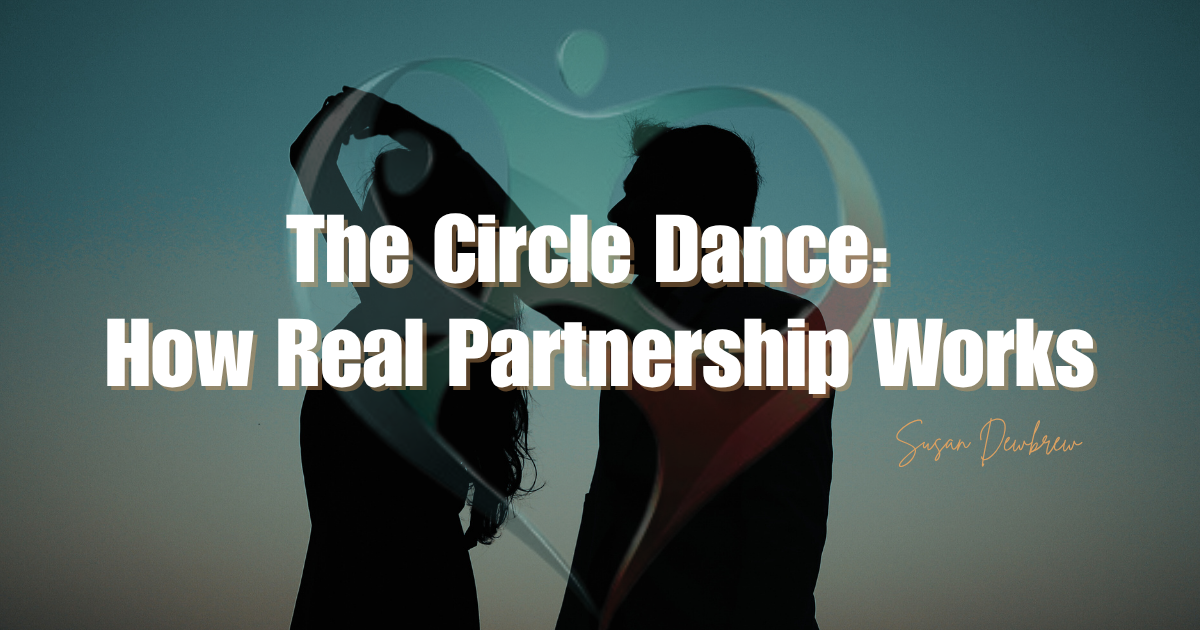
The Circle Dance: How Real Partnership Works
"Speaking to one another with psalms, hymns, and songs from the Spirit. Sing and make music from your heart to the Lord, always giving thanks to God the Father for everything, in the name of our Lord Jesus Christ. Submit to one another out of reverence for Christ." (Ephesians 5:19-21)
Notice the context of Paul's famous marriage teaching? It begins with singing together and flowing into mutual submission—like a beautiful dance where partners move in harmony, each responding to the other's lead in different moments.
This is what theologians call perichoresis—the "circle dance" that describes how the Trinity relates. And it's the model for all Kingdom relationships, especially marriage.
Beyond the Pyramid
Most of us have been taught to think of relationships in pyramid terms: someone's on top, someone's on bottom, and power flows in one direction. The husband is the "head," which means he's in charge. The wife "submits," which means she follows. Simple, right?
But this pyramid model creates all kinds of problems:
It reduces rich, complex human beings to simplistic roles
It creates power struggles instead of partnerships
It limits both people from becoming everything God created them to be
It contradicts the Trinity model, where Father, Son, and Spirit are equal yet distinct
The Kingdom operates on a completely different model: the circle dance.
In a circle dance, partners flow in and out of leading and following. Sometimes I lead, sometimes Gregory leads. Sometimes he initiates, sometimes I do. We're responsive to each other's movements, each other's strengths, each other's needs in different seasons.
The Context Changes Everything
Here's something most people miss about Ephesians 5: the command "wives, submit to your husbands" doesn't appear in isolation. It's part of a flowing sentence that begins with everyone submitting to everyone.
In the original Greek, verse 22 doesn't even contain the word "submit"—it borrows the verb from verse 21's command for mutual submission. Paul is saying that the wife's submission to her husband exists within the context of both partners submitting to each other.
This isn't about creating an exception to mutual submission—it's about showing how mutual submission works in marriage.
Flexible Roles, Not Rigid Rules
In our marriage, Gregory and I have learned to flow with each other based on gifts, circumstances, and seasons rather than gender-based rules.
For example:
Financially: There have been seasons where Gregory was the primary breadwinner and seasons where I've carried that role. Currently, I make significantly more money than he does through my real estate business, while he devoted years to serving those in need through food ministry. Neither of us feels threatened by this—we're both all-in together.
Decision-making: We don't operate with "Gregory gets the final say." Instead, we pray together, discuss together, and move forward only when we both have peace. If we disagree on important matters, we wait for clarity rather than forcing a decision.
Parenting: We're currently raising our granddaughter together. Gregory is just as involved in the nurturing, guidance, and daily care as I am. It's not "his job" to discipline and "my job" to comfort—we're partners in all of it.
The beauty of this approach is that we're both lending our strengths to our union, to our life together, without feeling constrained by artificial expectations about what we "should" do based on our gender.
When Disagreements Arise
Every couple disagrees sometimes. The question isn't whether conflicts will arise, but how we handle them when they do.
In pyramid-style relationships, disagreements become power struggles: "Who's going to win? Who has the final authority?" But in circle-dance relationships, disagreements become opportunities to seek God's wisdom together.
When Gregory and I can't agree on something important, we don't resort to "the husband decides." Instead, we:
Listen more carefully to understand each other's perspectives
Pray together for God's guidance
Wait for consensus rather than forcing a decision
Trust that two people seeking God together will find better answers than one person deciding alone
This approach requires patience and humility from both of us. But after 14 years of marriage, it's become as natural as breathing. The fruit is worth the effort—we make decisions that we both fully own and support, creating unity rather than resentment.
The Safety Factor
One reason our circle dance works is safety. Gregory embodies genuine masculine strength—he's physically powerful, emotionally steady, and completely capable of standing his ground when necessary. He grew up in challenging circumstances that taught him how to handle conflict and protect those he loves. But here's what makes him extraordinary: all of that strength has been consistently directed toward protecting and empowering me, never toward controlling or intimidating me.
I have never—not once in our 14 years together—felt afraid of Gregory's response to disagreement or disappointment. There's never been even a hint of physical, financial, or emotional intimidation when we don't see eye to eye.
This safety creates space for authentic partnership. When I know Gregory will never use his greater physical strength or societal privilege against me, I can open my heart fully to him without fear. And when Gregory knows I respect and honor him not out of obligation but out of genuine appreciation for his character, he can be authentic rather than maintaining a facade of "male leadership."
The Reciprocal Nature of Love
One of the most beautiful aspects of the circle dance is how it creates a virtuous cycle. Gregory's self-giving love makes me want to love him more deeply in return:
"That creates in me a desire to do the same in return. His love helps me to love better. I am a better person and better wife for having Gregory love me like he does."
This is exactly what Paul described in Ephesians 5. The husband's Christ-like love inspires the wife's respect and submission; the wife's respect and submission inspire the husband's deeper love. It's not a hierarchy but a dance of mutual honor that elevates both partners.
Supporting Each Other's Callings
Perhaps nothing reveals the beauty of circle-dance partnership more than how we approach each other's callings and ministries.
Gregory spent years pouring his life into feeding those in need through food ministry—work that fed the soul but not the bank account. I've built a successful real estate business that provides financial stability for our family. In a hierarchical marriage, these dual callings might create tension or competition. But in our marriage, they create beautiful synergy.
I support his heart for serving the poor, knowing it reflects Christ's heart, even though it meant financial sacrifice. Gregory supports my business success and even my writing that challenges traditional male authority—even though as a male minister, he could easily feel threatened by it.
We're not in competition with each other; we're in collaboration. His success is my success, and vice versa. When one of us flourishes, we both flourish.
Beyond Gender Wars
The circle dance transcends the "gender wars" that have divided so many marriages and churches. It's not about men versus women, or who gets to be "in charge." It's about both partners becoming everything God created them to be while lifting each other up in the process.
This approach frees us from artificial constraints:
Gregory doesn't have to pretend to be good at things he's not gifted for just because he's "the man"
I don't have to suppress my gifts or insights just because I'm "the woman"
We can both lead when our gifts are needed and follow when the other person's wisdom is required
We can flow with life's seasons rather than being locked into rigid roles
The Trinity Model
The most beautiful thing about the circle dance is that it reflects the very nature of God. Father, Son, and Holy Spirit exist in perfect unity—not hierarchy. They flow together in mutual love, mutual honor, and mutual submission.
Sometimes the Father initiates, sometimes the Son, sometimes the Spirit. Each has distinct roles and functions, but these don't create a power structure where one dominates the others. Instead, they create a beautiful dance of love that's so unified it's hard to know where one Person stops and another begins.
This is God's design for marriage: not a pyramid with someone on top and someone on bottom, but a circle dance that reflects the very heart of the Trinity.
It Takes Two
The circle dance requires both partners to participate. If one person insists on maintaining hierarchical control, the dance becomes impossible. If one person refuses to take any initiative or responsibility, the dance breaks down.
But when both partners embrace mutual submission—when both are committed to lifting each other up rather than seeking their own way—something beautiful happens. The relationship becomes spacious rather than confining. Each person has room to flourish because each is focused on the other's well-being.
An Invitation
If you've been living in pyramid-style relationships, the circle dance might seem foreign or even dangerous. "What if there's no one in charge? What if we can't agree? What if it creates chaos?"
But I've discovered that the opposite is true. Rigid hierarchies often create the very problems they're supposed to solve. When both partners know their perspective matters, they're more willing to compromise and collaborate. When neither feels they must fight for influence, both can lead and follow as needed without threats to their dignity.
The circle dance doesn't create chaos—it creates resilience. It doesn't weaken relationships—it strengthens them. And it doesn't diminish anyone—it empowers everyone involved.
This is the Kingdom reality Jesus demonstrated. This is the heart of the Gospel. And this is the beautiful truth that's been hiding in plain sight in Ephesians 5 all along: "Submit to one another out of reverence for Christ."
Welcome to the circle dance. Welcome to relationships that truly reflect the nature of God. Welcome to partnerships built on mutual love, mutual honor, and mutual empowerment.
It's the most beautiful dance you'll ever learn.
Blessings,
Susan 😊