
When Prayer Becomes “Christian” Witchcraft
"Just pray harder and your husband will change."
Sounds spiritual, right? Sounds like faith. Sounds like the kind of advice a good Christian woman should follow.
Except it's not faith. It's manipulation.
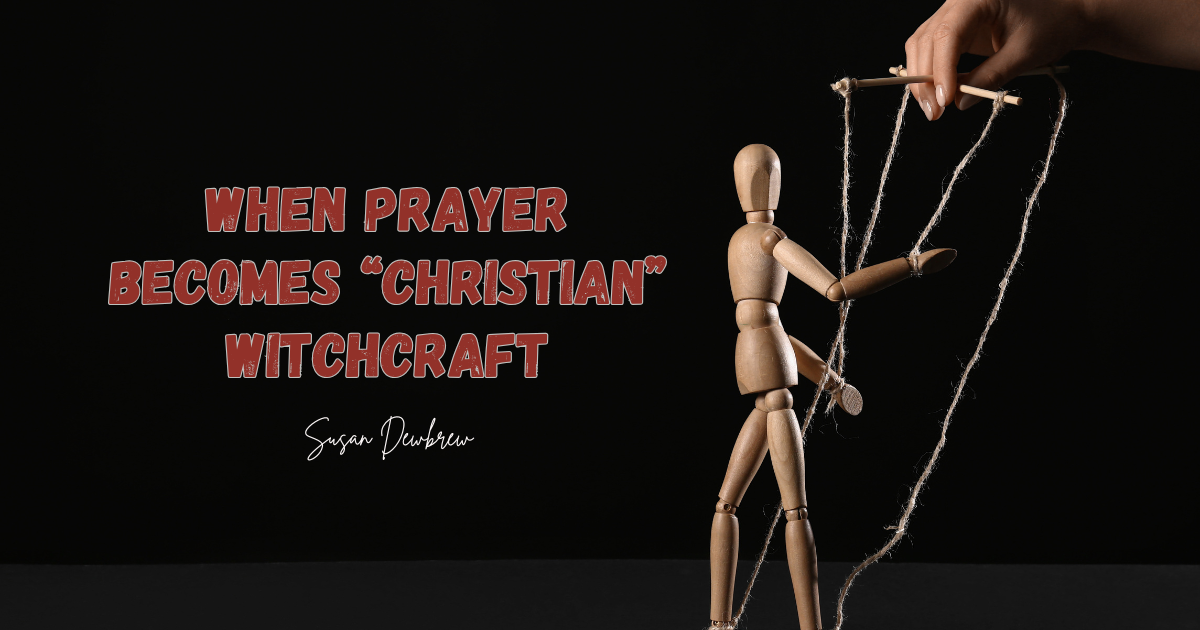
And when we use prayer as a tool to try to control someone else's choices, we're not partnering with God—we're practicing “Christian” witchcraft.
I know that sounds harsh. But stay with me, because this is one of the most dangerous lies the church tells women in abusive relationships.
What Is “Christian” Witchcraft?
Let me define my terms so we're clear.
Witchcraft, at its core, is about manipulation and control. It's about using spiritual power to bend reality to your will. It's about trying to force outcomes through rituals, spells, or spiritual practices.
“Christian” witchcraft is when we use Christian language and practices to do the same thing.
We pray with the expectation that if we just pray hard enough, long enough, with enough faith—God will make someone do what we want them to do.
We fast and believe that our fasting will obligate God to change our circumstances.
We claim Bible verses and quote them back to God as if they're magic words that force His hand.
That's not faith. That's manipulation.
And it completely misses the heart of how God's Kingdom actually works.
The Lie: "It's Your Duty to Pray Him Into Righteousness"
Here's what I hear all the time from women in difficult marriages:
"My pastor told me that if I pray faithfully for my husband, God will change him."
"I was told that it's my duty as a wife to intercede for my husband—that his spiritual condition is dependent on my prayers."
"They said if the marriage doesn't get better, it's because I didn't pray enough."
Do you see the problem here?
This theology puts the entire burden of another person's choices on the wife. It makes her responsible for his sin. It tells her that she has the power to make him righteous through her prayers.
And if it doesn't work? Well, she didn't pray hard enough. She didn't have enough faith. She didn't intercede with the right heart.
It's her fault.
That's not God's Kingdom. That's toxic theology that keeps women trapped in dysfunction, believing they have some kind of magical power to control their husband's choices if they just perform the right spiritual rituals.
Prayer Invites, It Doesn't Control
Let me be very clear about what prayer actually does.
Prayer invites God into your circumstances. It aligns your heart with His heart. It creates space for Holy Spirit to work.
But prayer doesn't control outcomes.
Prayer doesn't force people to make the choices you want them to make.
Prayer doesn't obligate God to do things your way.
Why? Because God won't violate free will—not yours, and not anyone else's.
Look at the entire Old Testament. It's one story after another of God's people making terrible choices. And God doesn't force them to do the right thing. He invites. He pursues. He warns. He pleads.
But He doesn't control.
Even Jesus, when He prayed in the Garden of Gethsemane, ended His prayer with, "Nevertheless, not my will, but yours, be done" (Luke 22:42, ESV).
If Jesus surrendered His will to the Father instead of trying to manipulate the outcome—why do we think we can pray someone else into doing our will?
The Danger of Making Prayer a Duty
When you turn prayer into a duty—something you have to do to make your spouse change—you violate the very heart of what prayer is.
Prayer is supposed to be intimate communion with God. It's supposed to be relationship, conversation, connection.
But when it becomes a duty, it becomes a religious ritual. You're going through the motions. You're checking the box. You're doing it because you think it will produce a specific result.
And here's what happens: when the result doesn't come, you feel like a failure.
"I prayed every day for a year and he didn't change. What did I do wrong?"
"I fasted and prayed and claimed Bible verses and nothing happened. I must not have enough faith."
"God must be disappointed in me because I couldn't pray my husband into righteousness."
That's heartbreaking. And it's a lie.
You didn't fail. The theology failed you.
God Won't Force Anyone's Free Will
Let me say this as clearly as I can: you cannot pray someone into righteousness if they don't want to be righteous.
You can pray for them. You absolutely should pray for them. Your prayers matter.
But your prayers won't override their free will.
God could force everyone to choose righteousness. He could make us all obey Him. He could remove our ability to sin.
But He doesn't. Because that's not love. That's control.
Love requires freedom. Love requires choice.
And God loves us too much to force us.
So if God Himself won't violate someone's free will, why do we think our prayers can?
The Difference Between Intercession and Manipulation
Now, let me be clear: there is such a thing as intercessory prayer. There is power in praying for others, standing in the gap, asking God to work in their hearts.
But intercession is different from manipulation.
Intercession says: "God, I'm asking You to work in my husband's heart. I'm asking You to open his eyes to the truth. I'm asking You to bring conviction and draw him to repentance. But I surrender the outcome to You. I trust that You love him even more than I do, and I trust Your timing."
Manipulation says: "God, I need You to make my husband change. I've been faithful. I've prayed. I've fasted. I've done everything right. So You owe me this. You have to fix him. And if You don't, I'll keep praying harder until You do."
See the difference?
One is surrender. One is control.
One trusts God. One demands God.
When Prayer Becomes About Your Performance
Here's another problem with the "pray harder and he'll change" theology: it makes prayer about your performance instead of about God's grace.
It turns prayer into a works-based system.
"If I pray long enough, if I pray with enough faith, if I use the right words, if I quote the right verses—then God will give me what I want."
That's not grace. That's manipulation.
And it completely misses the gospel.
The gospel is that we can't earn anything from God. We can't manipulate Him. We can't obligate Him. We can't force His hand.
He gives freely because He loves us, not because we perform well.
Your prayers don't work because you pray them perfectly. Your prayers work because God is good and He loves you and He's already moving in your circumstances—whether you pray or not.
Prayer invites you into partnership with what God is already doing. It doesn't force God to do what you want.
The Real Issue: His Choices Are His
The hardest truth to accept is this: your husband's choices are his responsibility, not yours.
If he's abusive, that's his choice.
If he's unfaithful, that's his choice.
If he's addicted to pornography, that's his choice.
If he refuses to get help, that's his choice.
None of that is your fault. None of that is because you didn't pray enough.
You can't control another person's choices. Not through prayer, not through submission, not through respect, not through anything.
And the church does women a massive disservice when it tells them that if they just perform the right spiritual rituals, they can make their husbands righteous.
That's not how it works.
What Prayer Actually Does
So if prayer doesn't control outcomes, what does it do?
Prayer changes you.
When you pray, Holy Spirit shapes your heart. He gives you wisdom. He gives you peace. He gives you discernment.
Prayer helps you see the situation clearly instead of through the fog of dysfunction.
Prayer helps you hear God's voice about what you should do—when to stay, when to set boundaries, when to leave.
Prayer connects you to the Source of all strength, all wisdom, all love.
But prayer doesn't make your husband choose righteousness. Only he can do that.
When God Asks You to Pray—And When He Doesn't
Sometimes Holy Spirit will prompt you to pray for your spouse. Absolutely, follow that leading.
But here's what's important: Holy Spirit won't burden you with the weight of someone else's choices.
If you feel crushed under the responsibility of praying your husband into righteousness, if you feel like his spiritual condition is entirely dependent on your prayers, if you feel guilty every time you don't pray—that's not Holy Spirit.
That's religious obligation. That's toxic theology. That's lies.
Holy Spirit's voice is kind. It's empowering. It's graceful.
He might prompt you to pray, but He won't make you feel like a failure if you don't pray perfectly.
He might invite you into intercession, but He won't put the weight of someone else's sin on your shoulders.
He might ask you to stand in the gap, but He won't tell you it's your job to change someone else.
The Heartbreak of False Hope
One of the cruelest things about this theology is the false hope it creates.
Women stay in abusive situations year after year, believing that if they just pray harder, if they just have more faith, if they just intercede more faithfully—their husbands will change.
And when it doesn't happen, they blame themselves.
"I must not have prayed enough."
"I must not have had enough faith."
"God must be angry with me because I couldn't save my marriage through prayer."
That's heartbreaking. And it's a lie.
You are not responsible for your husband's choices. Your prayers are powerful, but they're not magic. And God's heart for you is not "Stay in dysfunction until you pray him into righteousness."
God's heart for you is freedom.
Read the Old Testament
Want to know how seriously God takes free will? Read the Old Testament.
God sent prophet after prophet to His people. He performed miracle after miracle. He pleaded with them, warned them, gave them chance after chance to turn back to Him.
And they refused.
If God Himself couldn't make His people choose righteousness through all of that, why do we think we can make our spouses choose righteousness through our prayers?
The pattern is clear: God invites. God pursues. God creates opportunities. God demonstrates His love.
But God doesn't force.
And neither should we.
The Truth About Your Power
Here's what you need to know: you are not powerless in your situation.
But your power isn't in manipulating your husband into righteousness through prayer.
Your power is in your own choices.
You have the power to set boundaries.
You have the power to protect yourself and your children.
You have the power to follow Holy Spirit's leading about when to stay and when to go.
You have the power to say, "I can't force you to be healthy, but I can protect myself from your refusal to change."
That's real power. That's Kingdom power.
Not the power to control someone else, but the power to steward your own life well.
What Healthy Prayer Looks Like
So what does healthy prayer look like in a difficult marriage?
It looks like surrender: "God, I don't know what to do. Show me."
It looks like wisdom: "God, help me see this situation clearly."
It looks like discernment: "God, is this Holy Spirit prompting me or is this fear?"
It looks like trust: "God, I'm letting go of the outcome. I trust You with my spouse, with my children, with my future."
It looks like intercession: "God, I'm asking You to work in my husband's heart. But I'm not going to make myself responsible for his choices."
And sometimes, it looks like asking for the courage to leave: "God, I can't do this anymore. Give me the strength to protect myself and my children."
That's prayer that partners with Holy Spirit instead of trying to manipulate outcomes.
The Freedom of Surrender
Here's the beautiful irony: when you stop trying to control the outcome through prayer, you actually become free.
Free from the crushing weight of responsibility for someone else's choices.
Free from the guilt when your prayers don't produce the results you want.
Free from the religious performance of trying to pray perfectly.
Free to hear God's voice clearly about what you should actually do.
When you surrender the outcome to God and trust that He loves your spouse more than you do, you can finally rest.
You can pray without desperation.
You can trust without anxiety.
You can love without enabling.
And that's when real transformation becomes possible—not because you prayed hard enough, but because you got out of the way and let God work.
What Prayer Really Is
Let me end with this: prayer is not a magic formula. It's not a tool to manipulate reality. It's not a way to force God's hand.
Prayer is relationship. Prayer is communion. Prayer is aligning your heart with God's heart.
And God's heart is always for freedom, for healing, for wholeness.
If you're using prayer to try to keep yourself trapped in dysfunction, that's not God's voice you're listening to.
If you feel crushed under the weight of "praying someone into righteousness," that's not God's heart for you.
If you've been told that your marriage's failure is because you didn't pray enough, that's a lie.
The truth is this: you can pray faithfully, intercede powerfully, and surrender completely—and your spouse might still refuse to change.
Because that's their choice. Not yours.
And when you finally accept that, you'll be free to make the choices you need to make for your own life.
That's not giving up. That's wisdom.
That's not lack of faith. That's trust.
And that's the kind of prayer God honors—not the kind that tries to control, but the kind that surrenders and trusts Him with the outcome.
Blessings,
Susan 😊